Mathematics
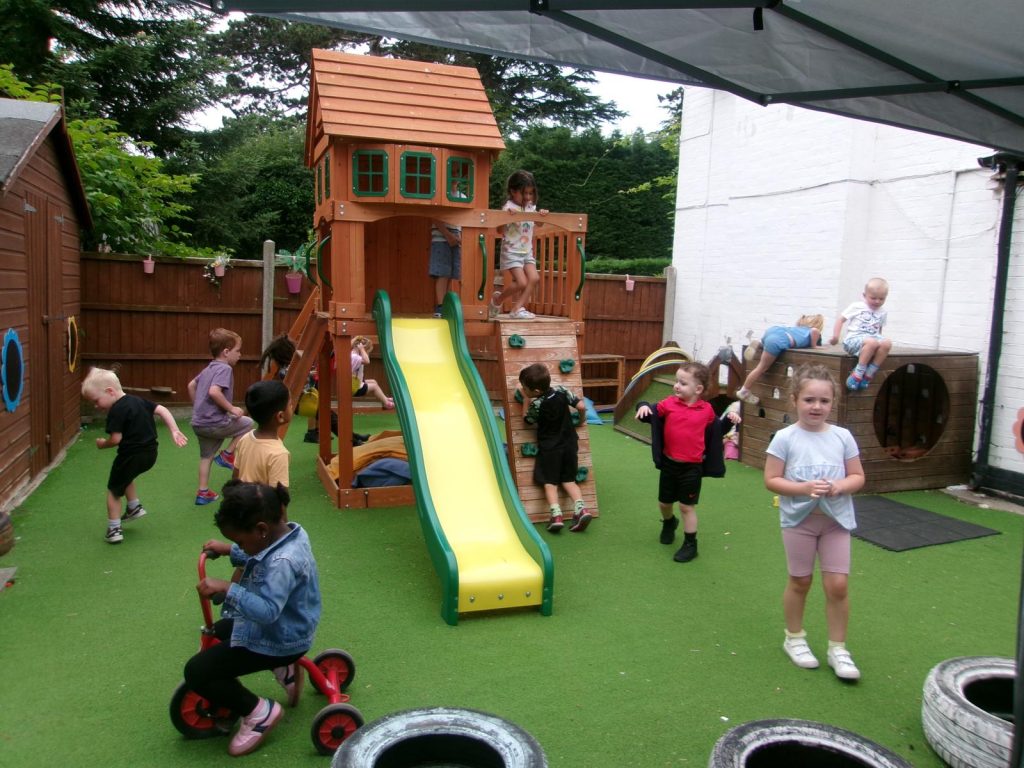
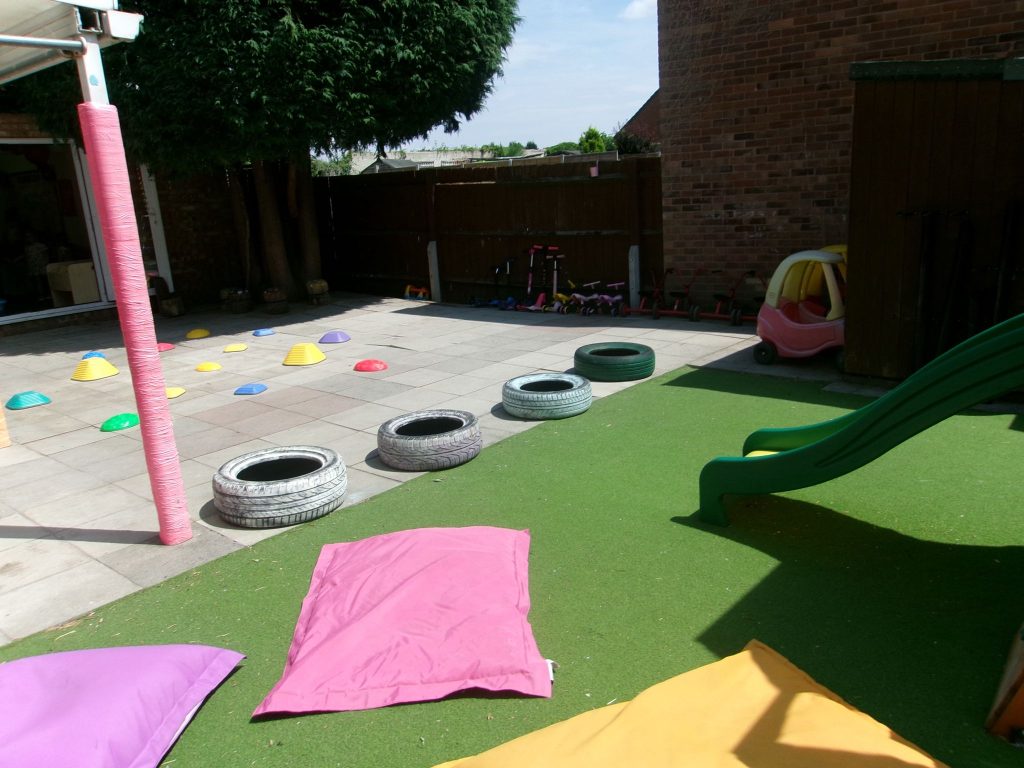
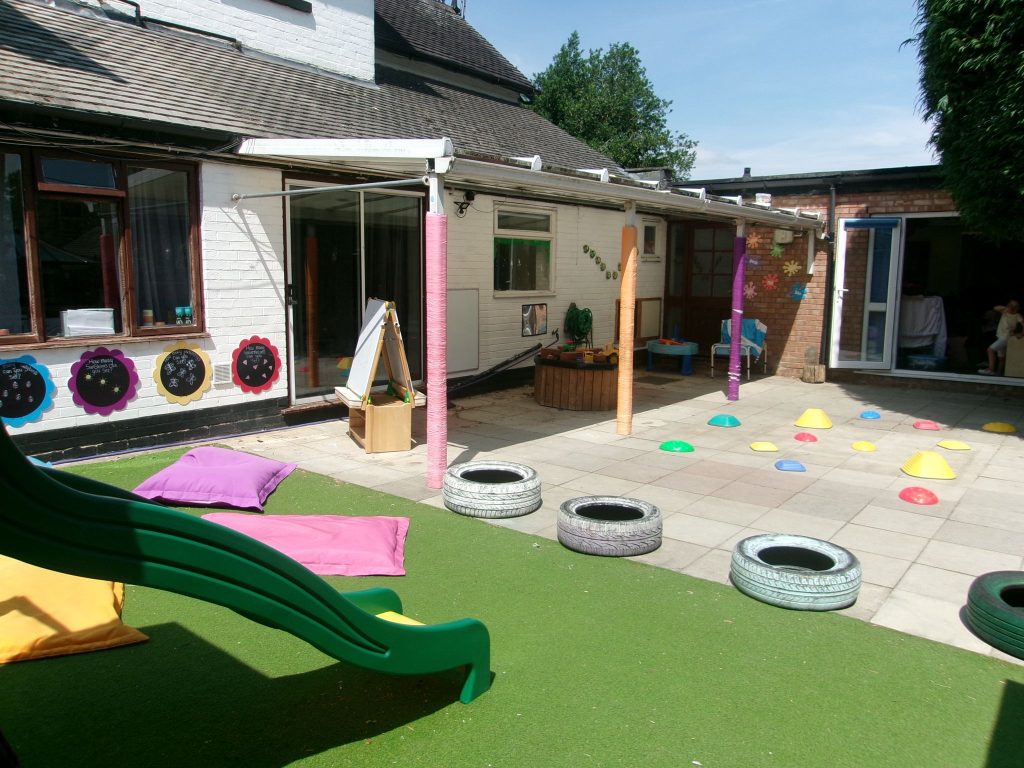
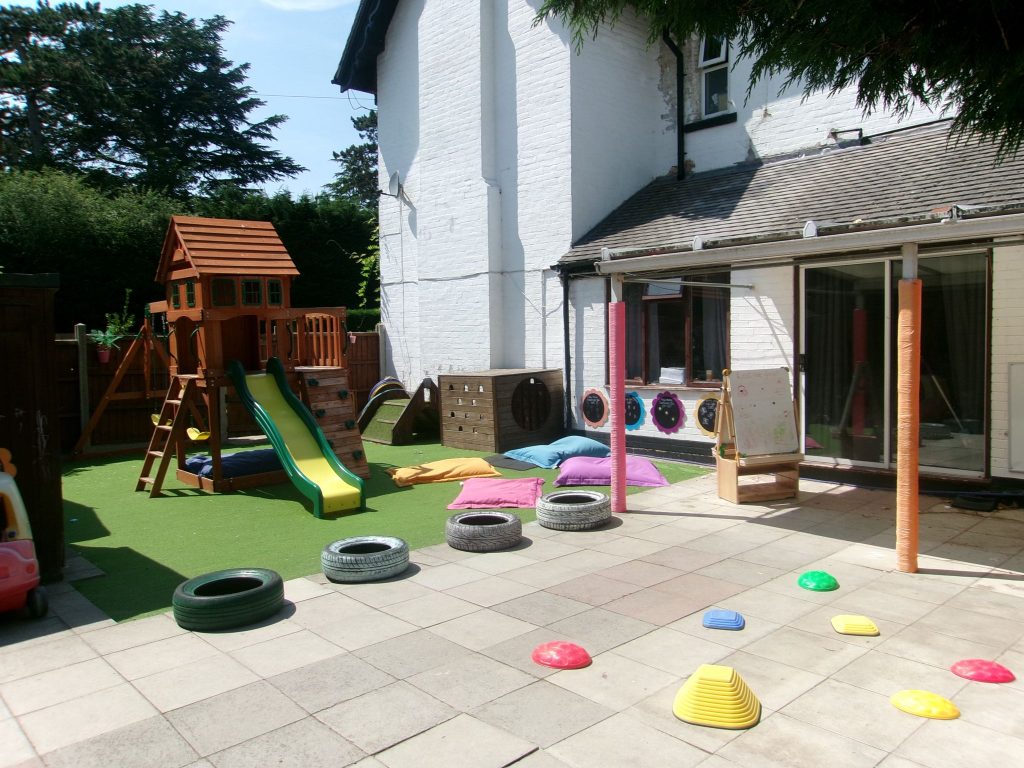
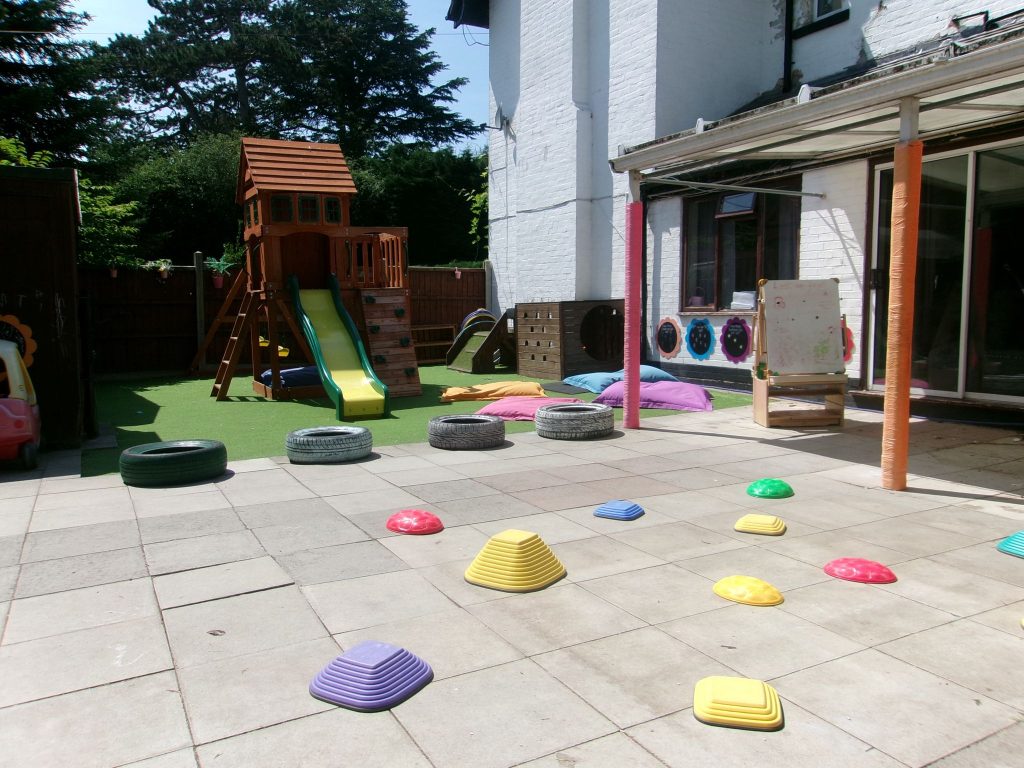
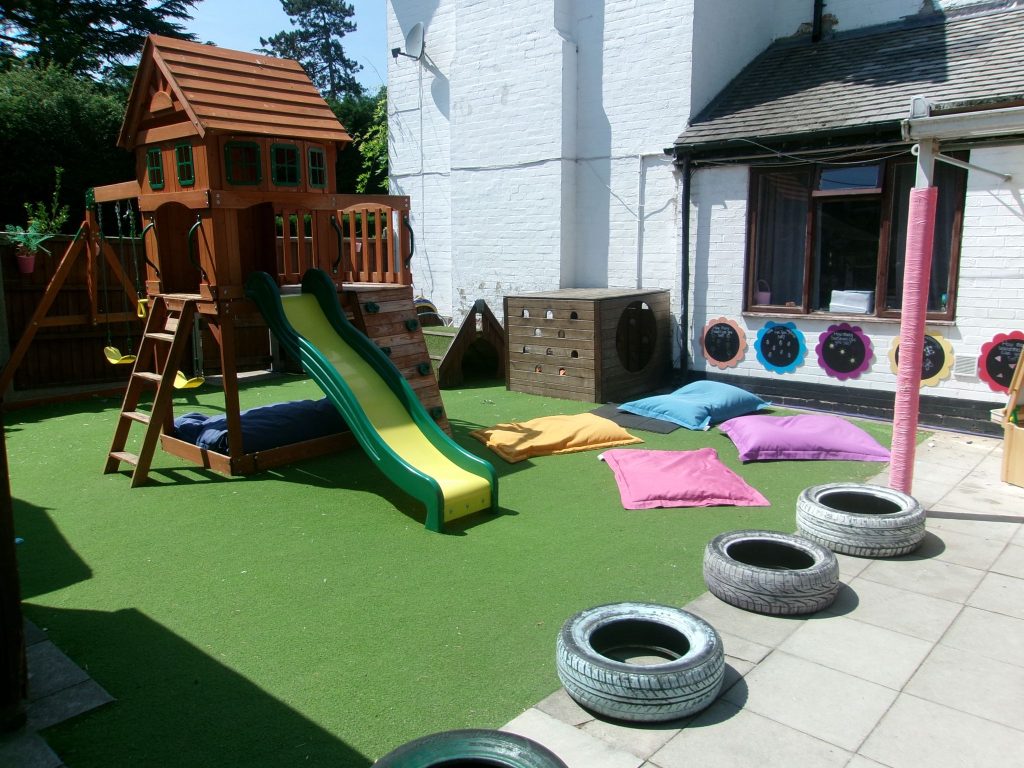
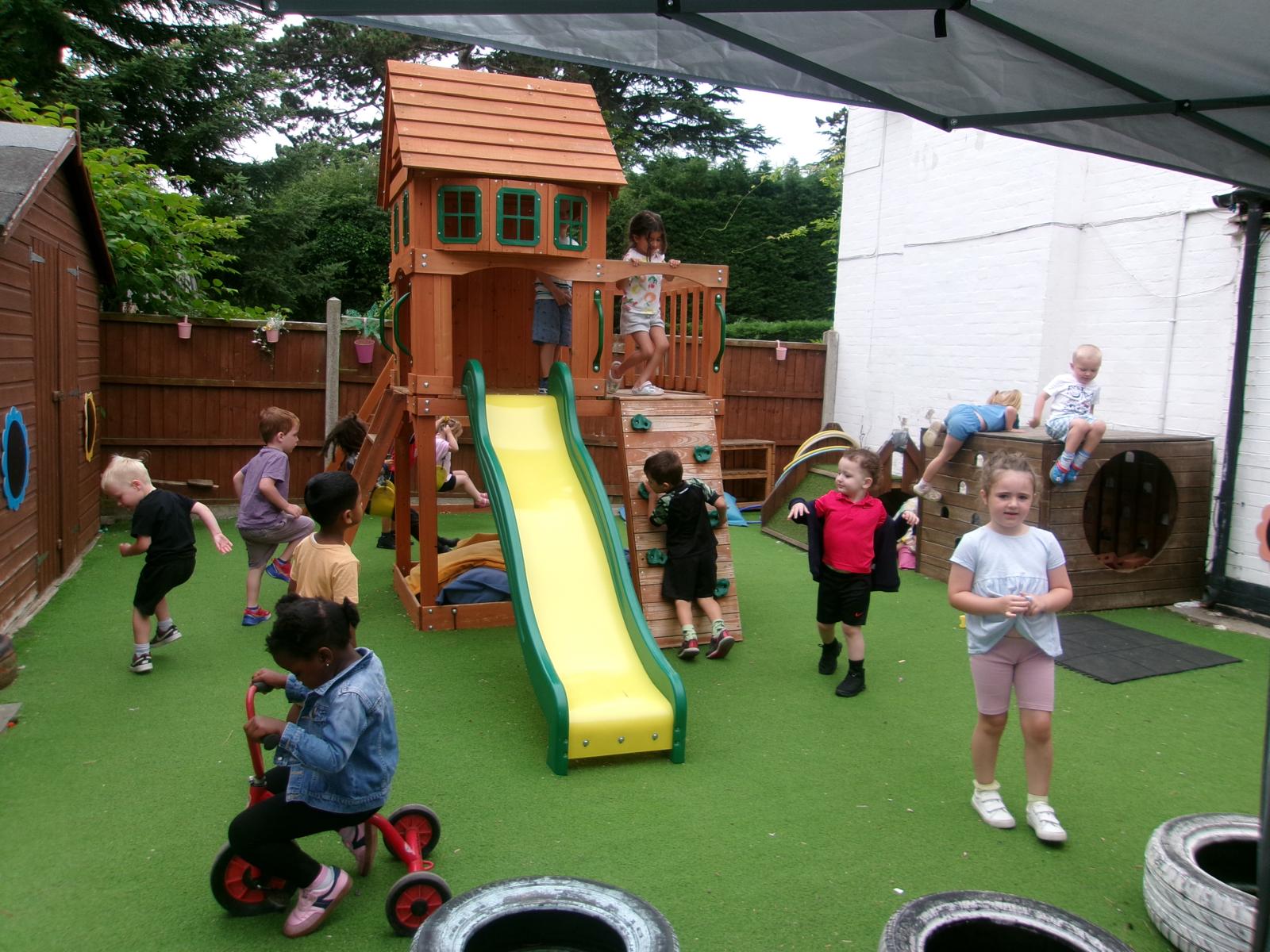
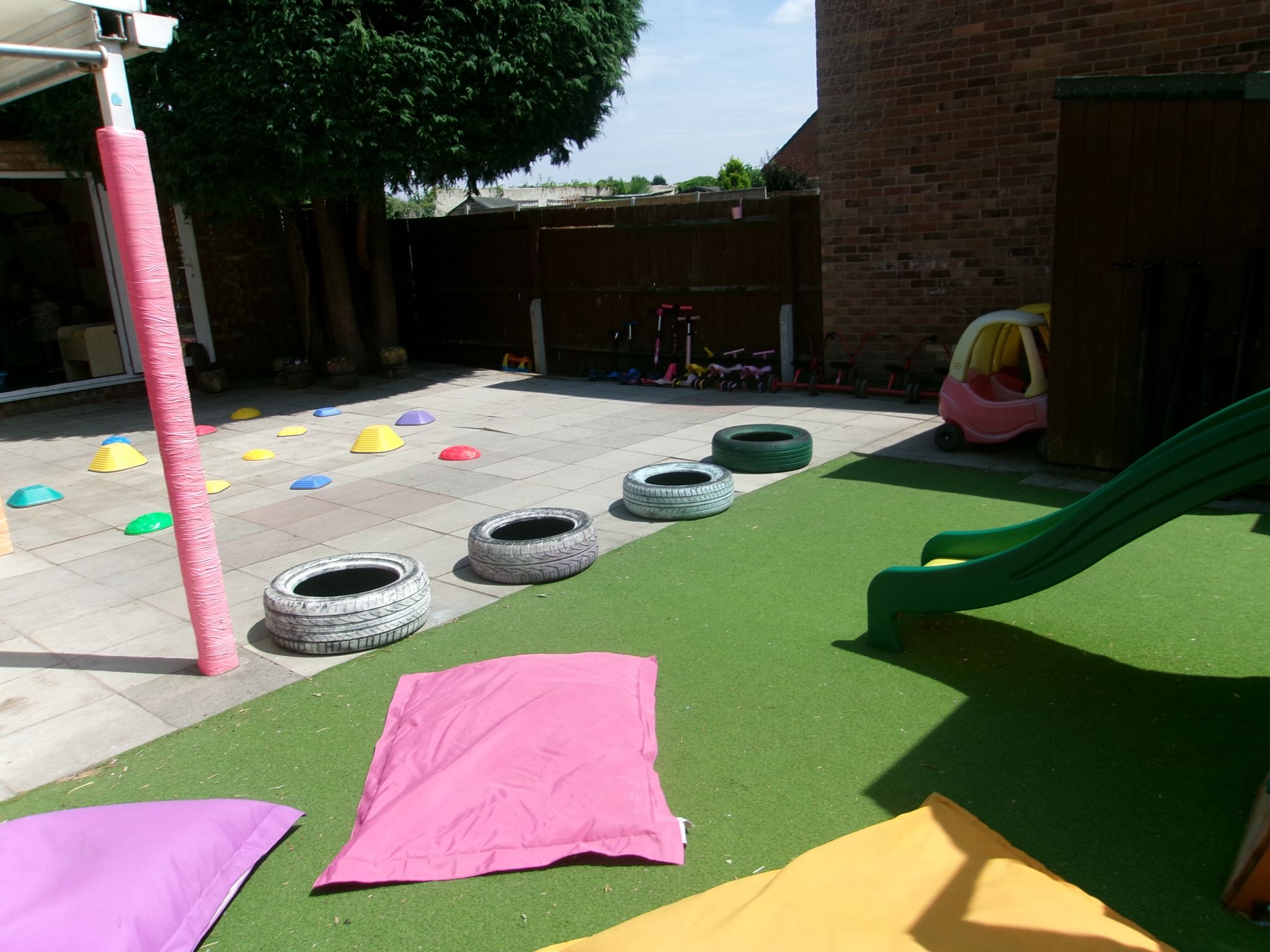
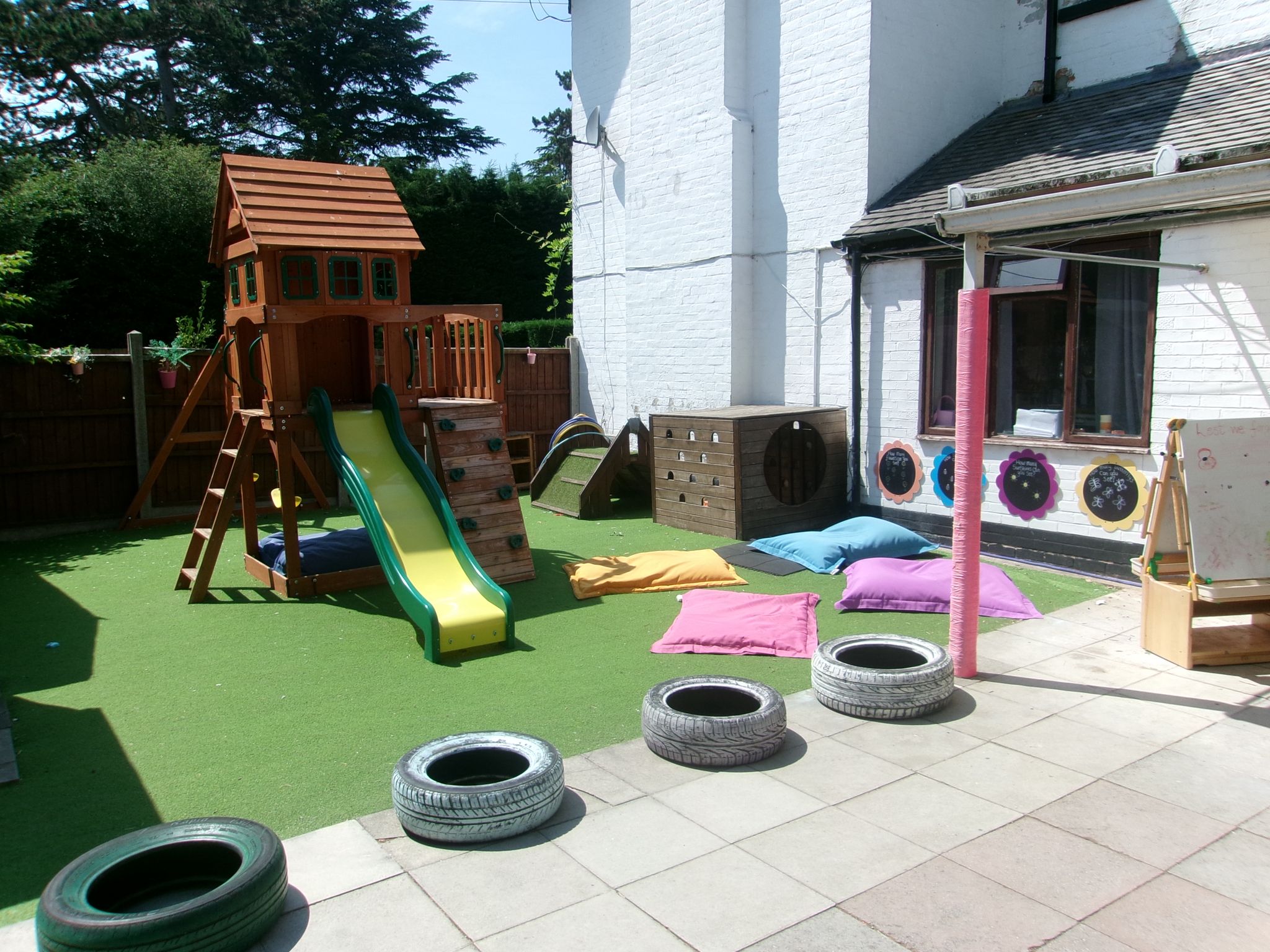
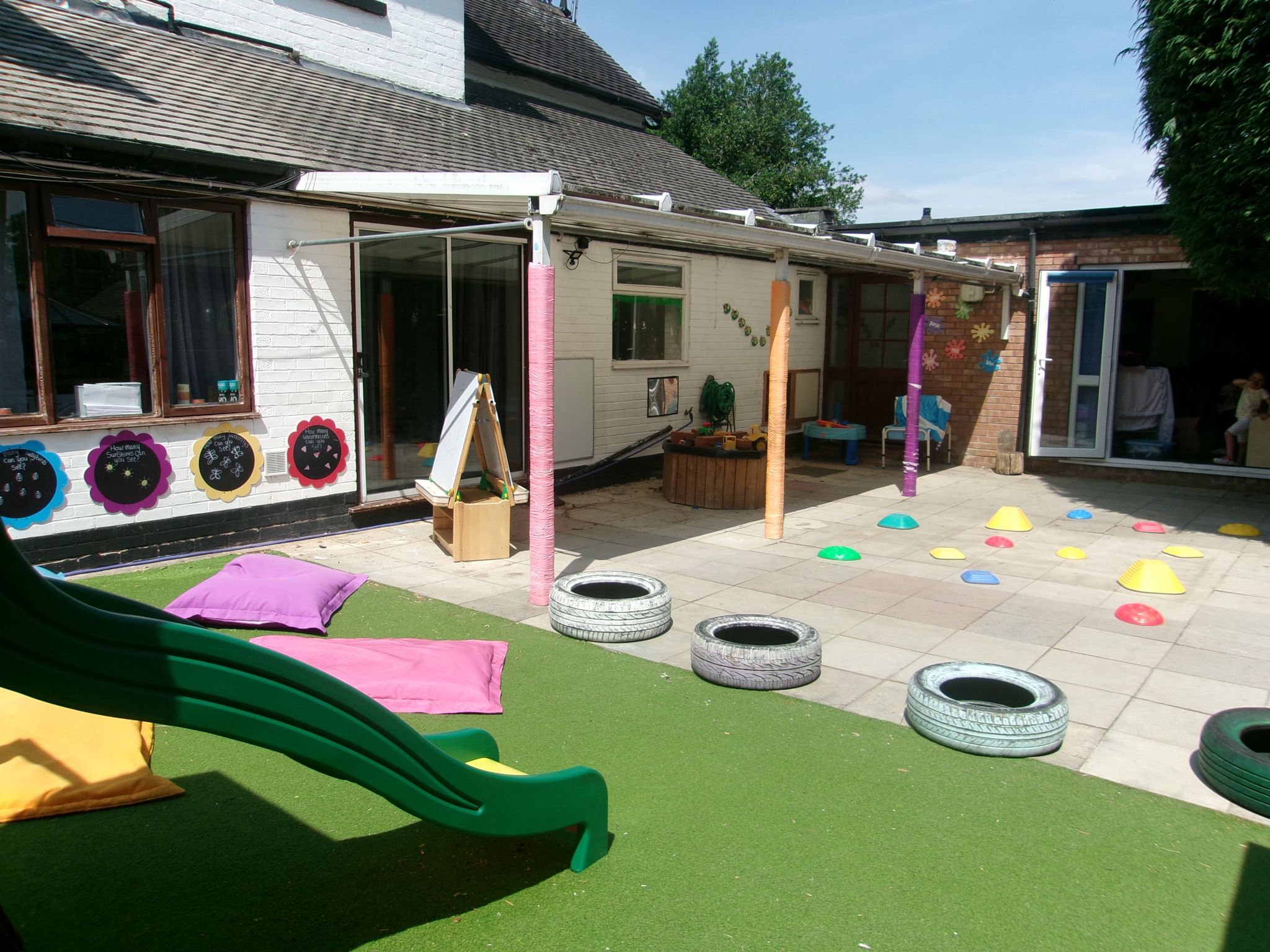
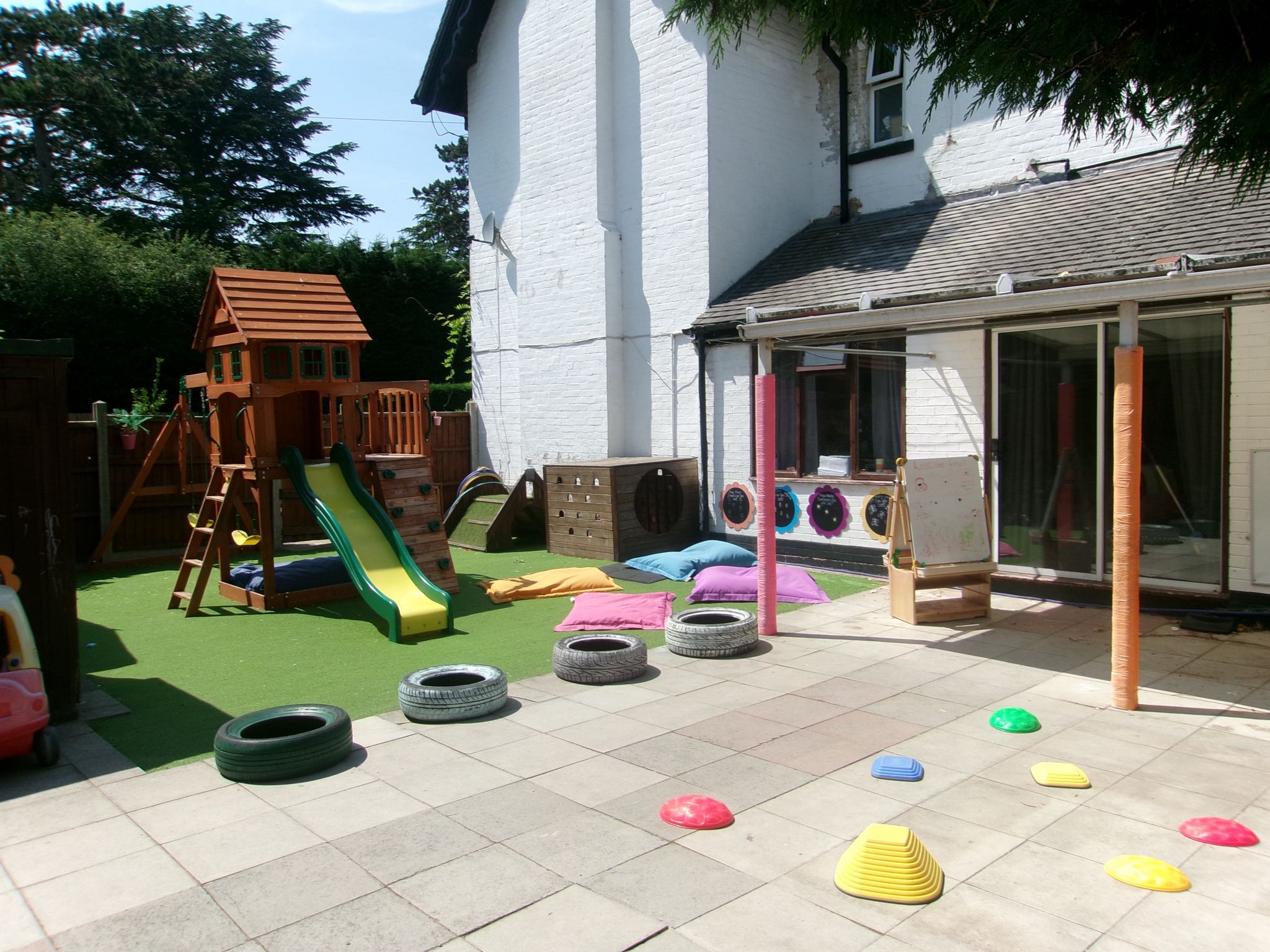
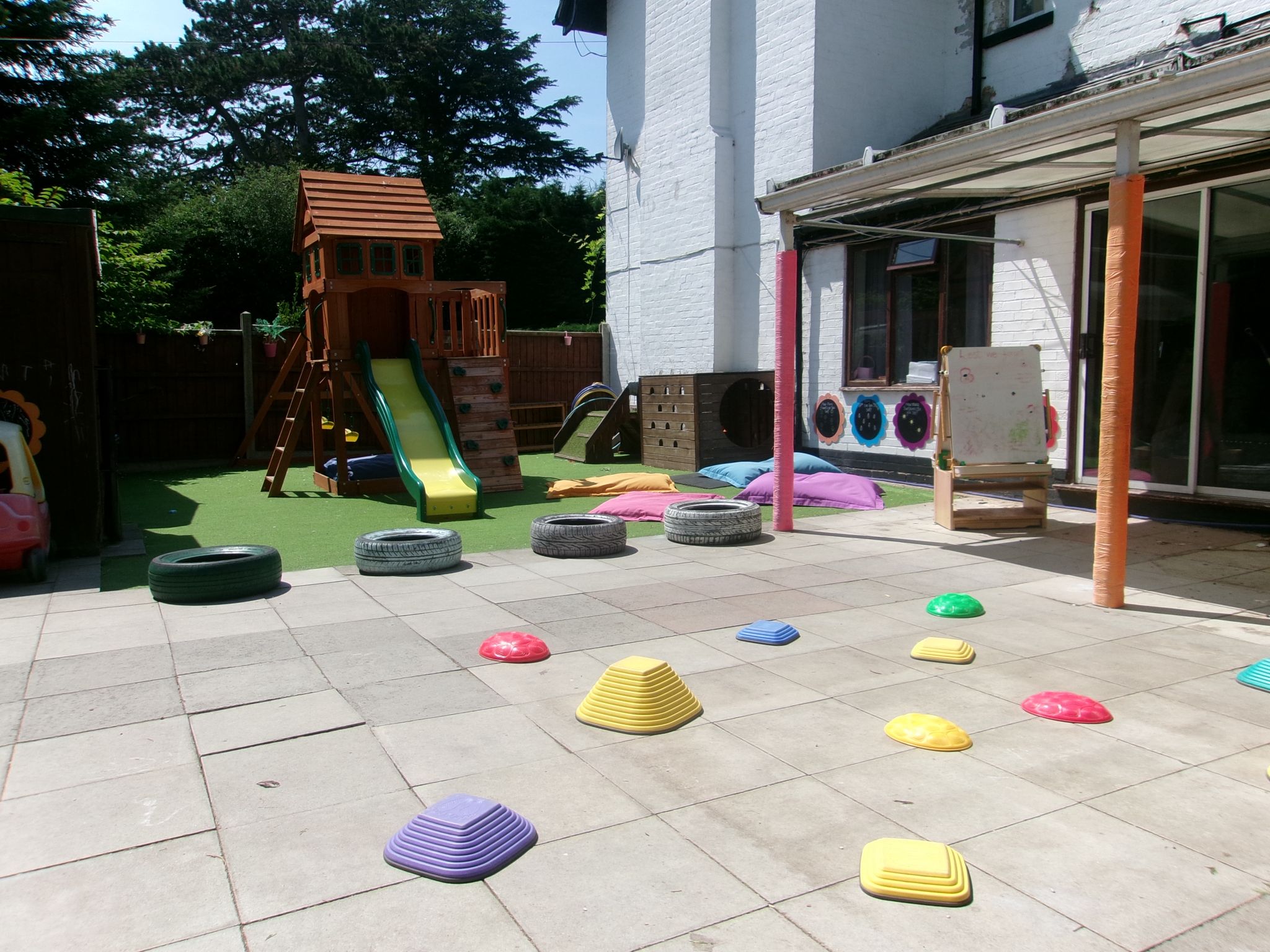
- Children develop counting, measuring, comparing, and positional language through obstacle courses and construction play.
- Concepts such as size, shape, distance, and sequencing are explored naturally during outdoor activities.
Understanding the World
- Outdoor play allows children to observe seasonal changes, weather, plants, and wildlife.
- They investigate different materials, textures, and the natural environment.
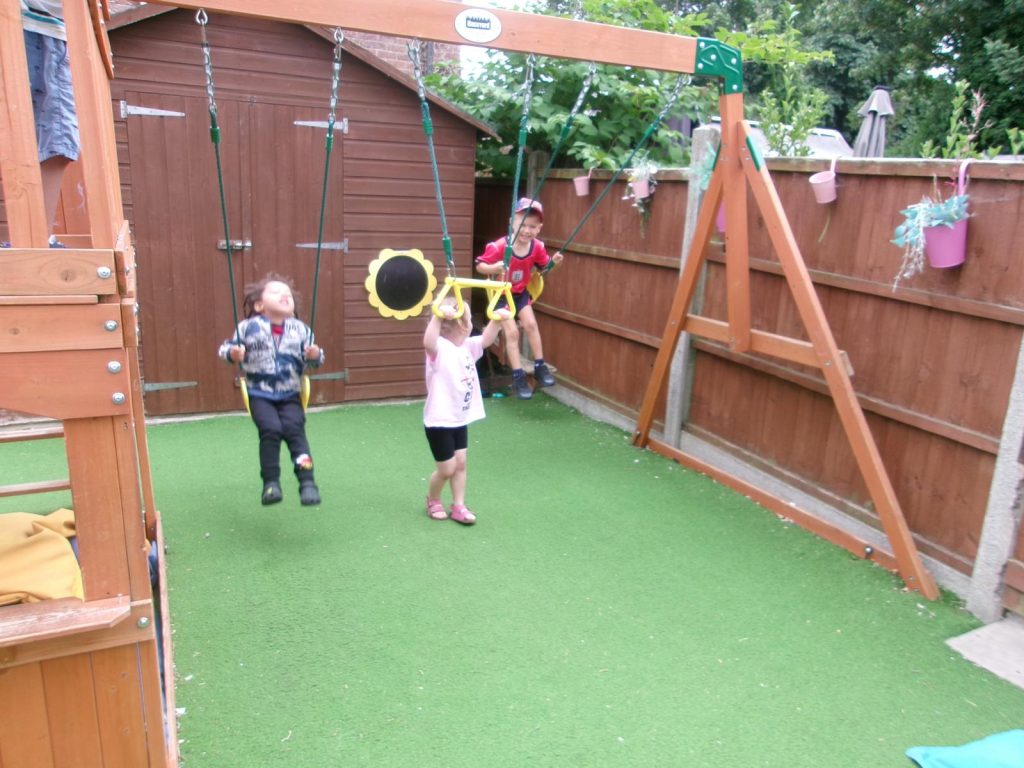
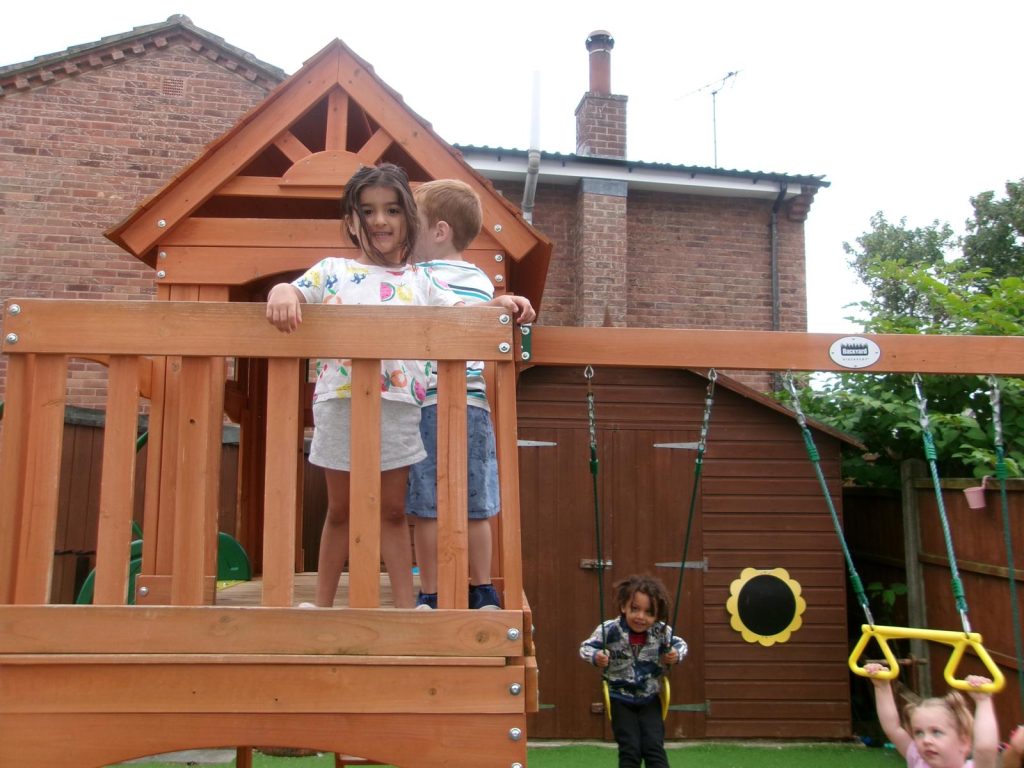
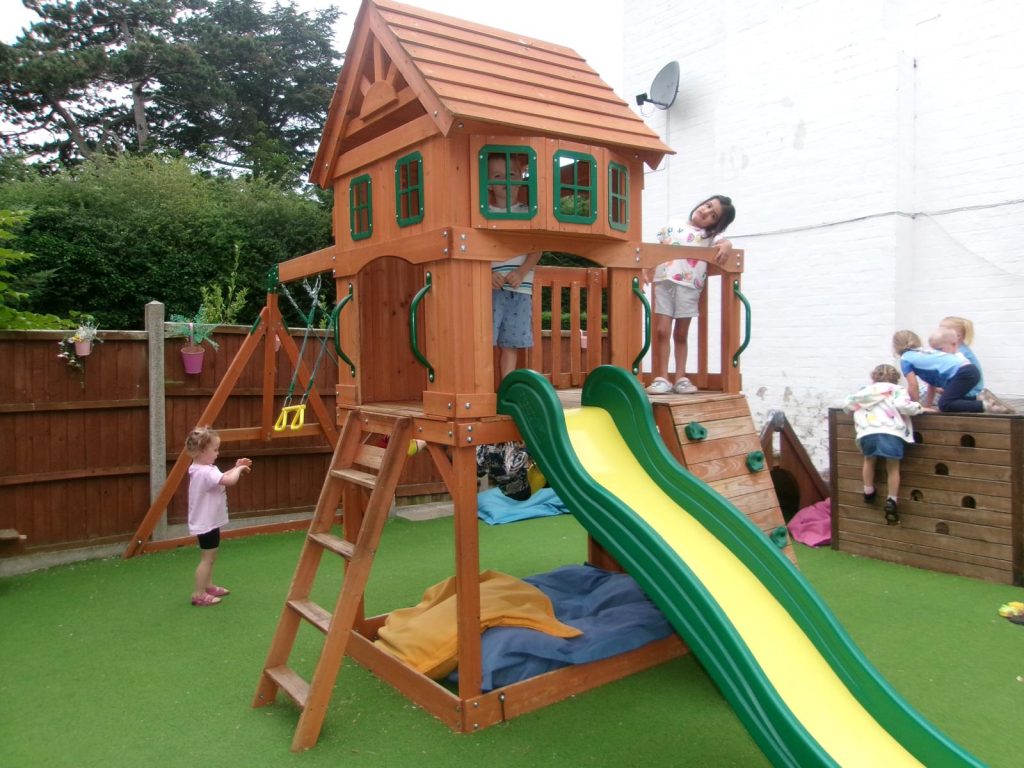
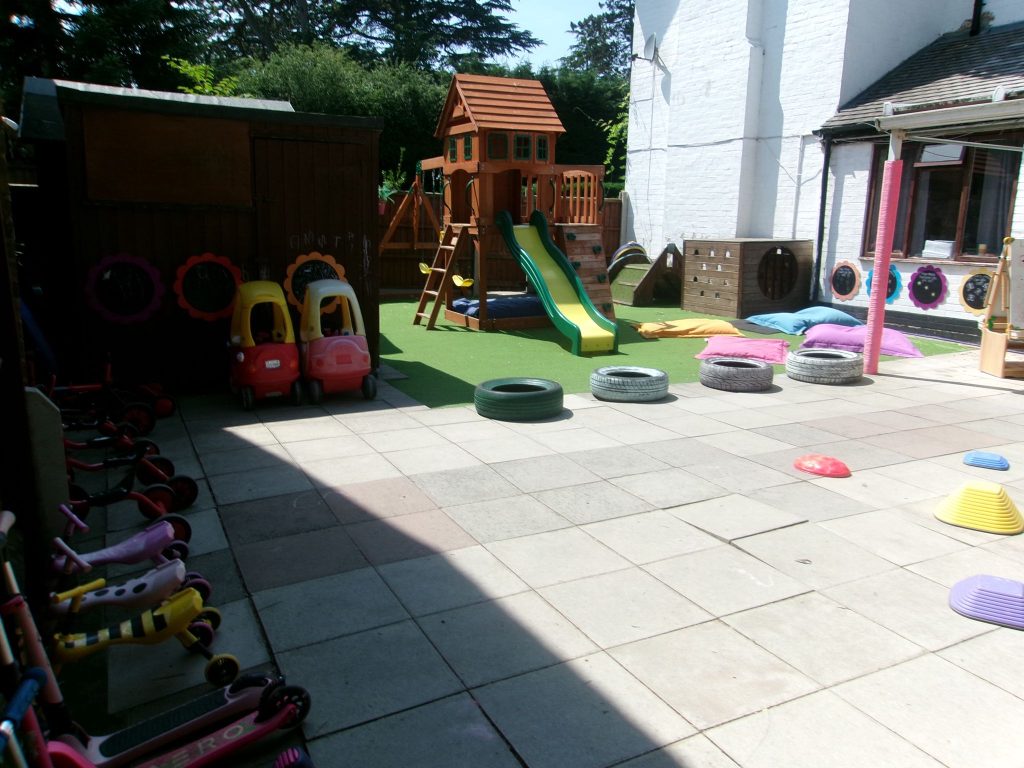
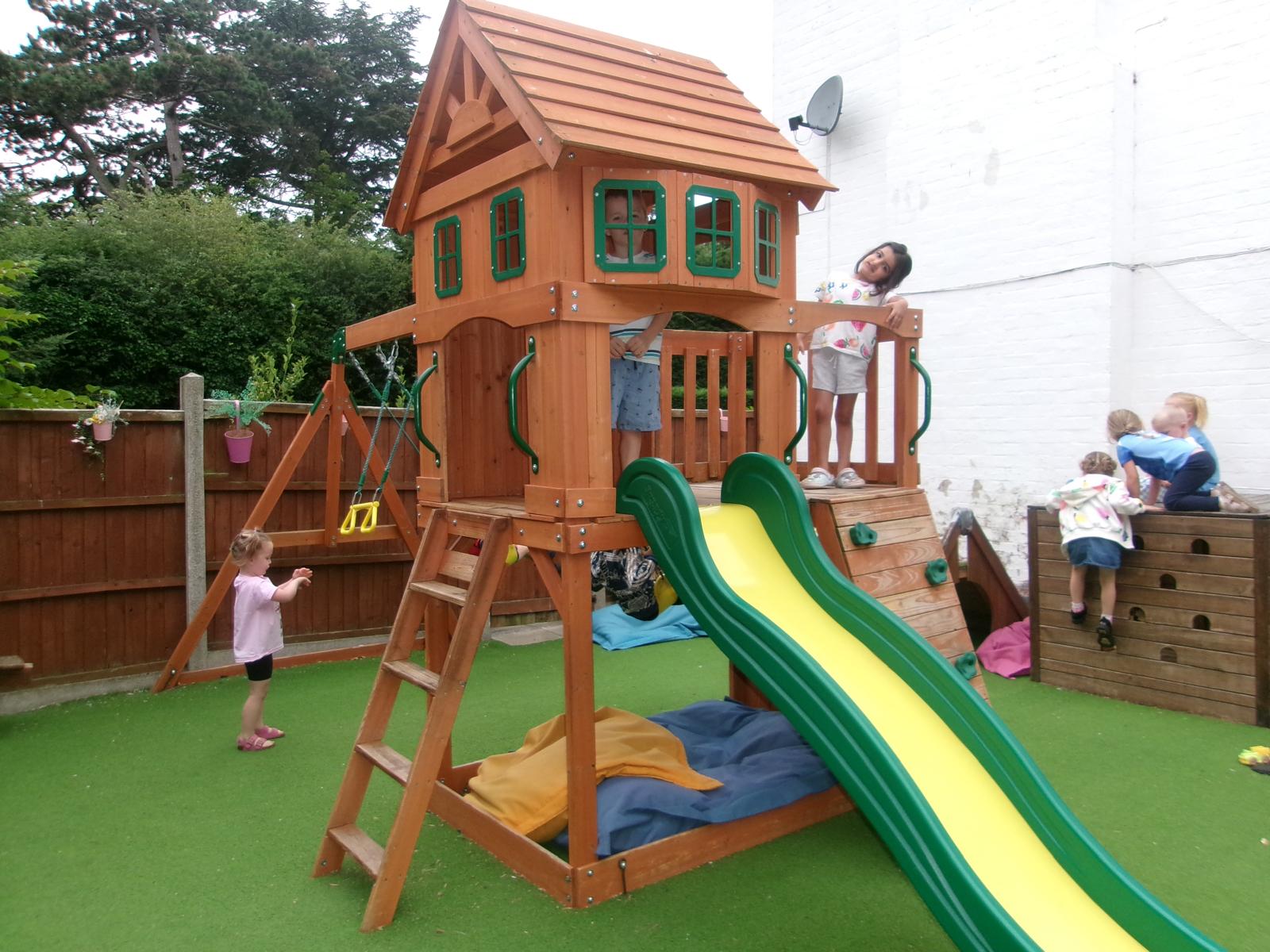
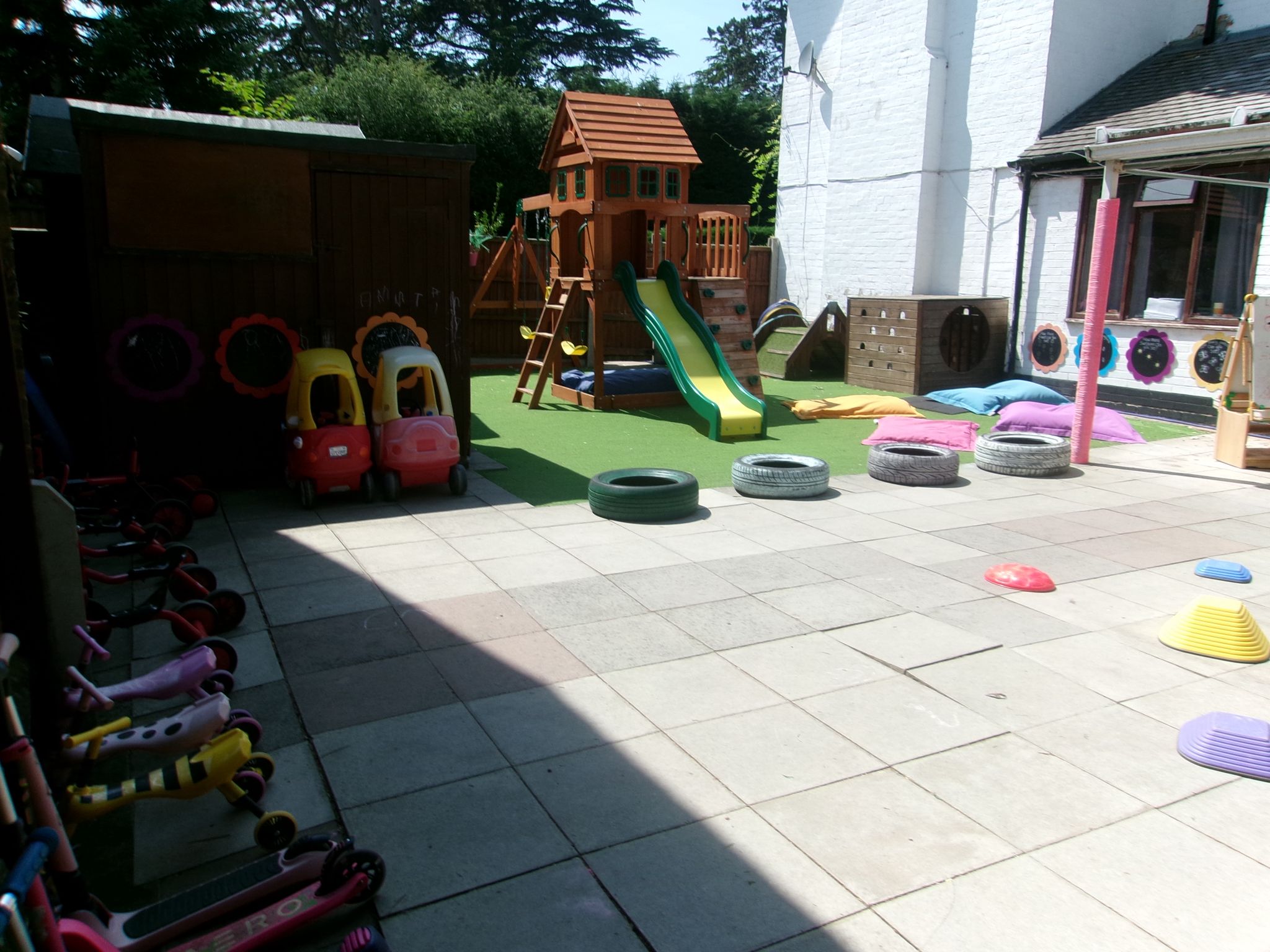
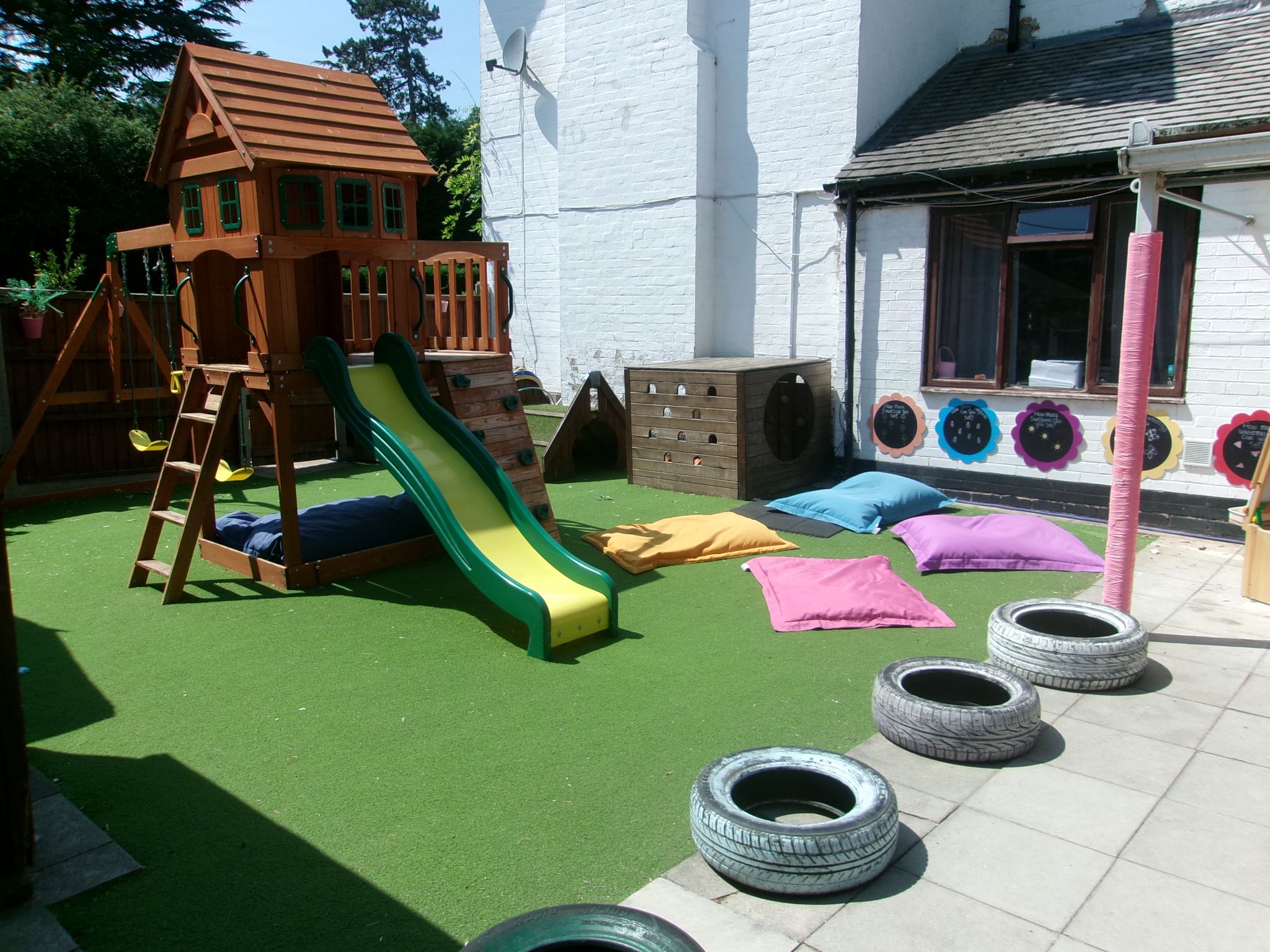
- Role-play with vehicles and the playhouse helps children make sense of the world around them.
Expressive Arts and Design
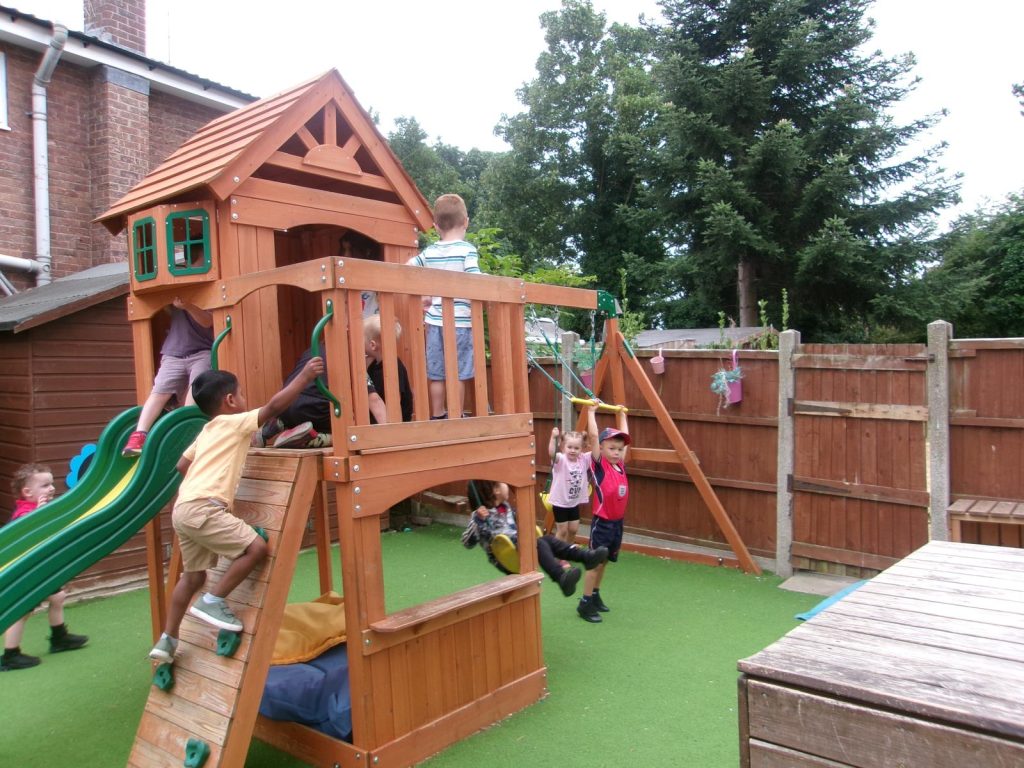
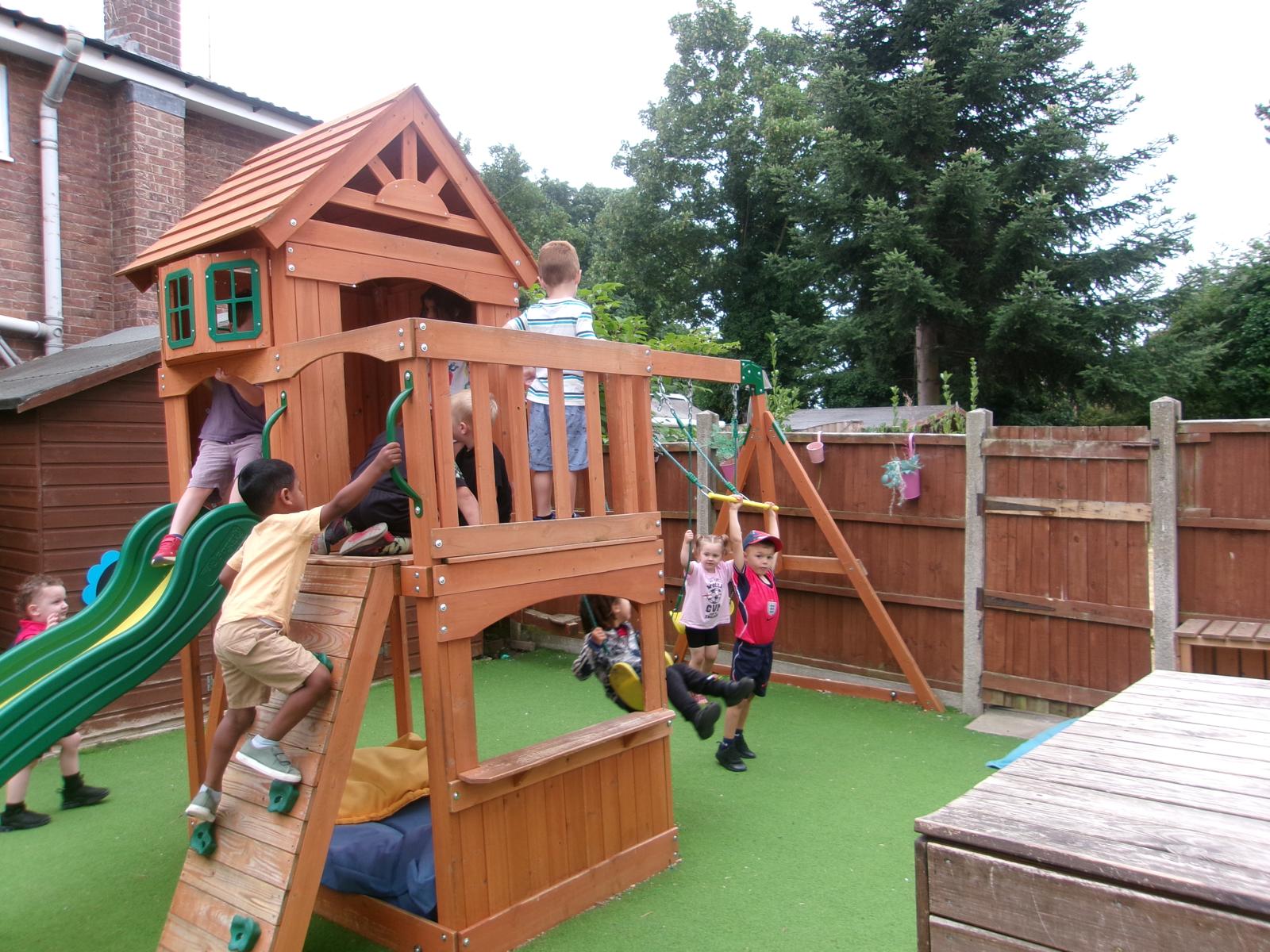
- The playhouse encourages imaginative role-play and storytelling.
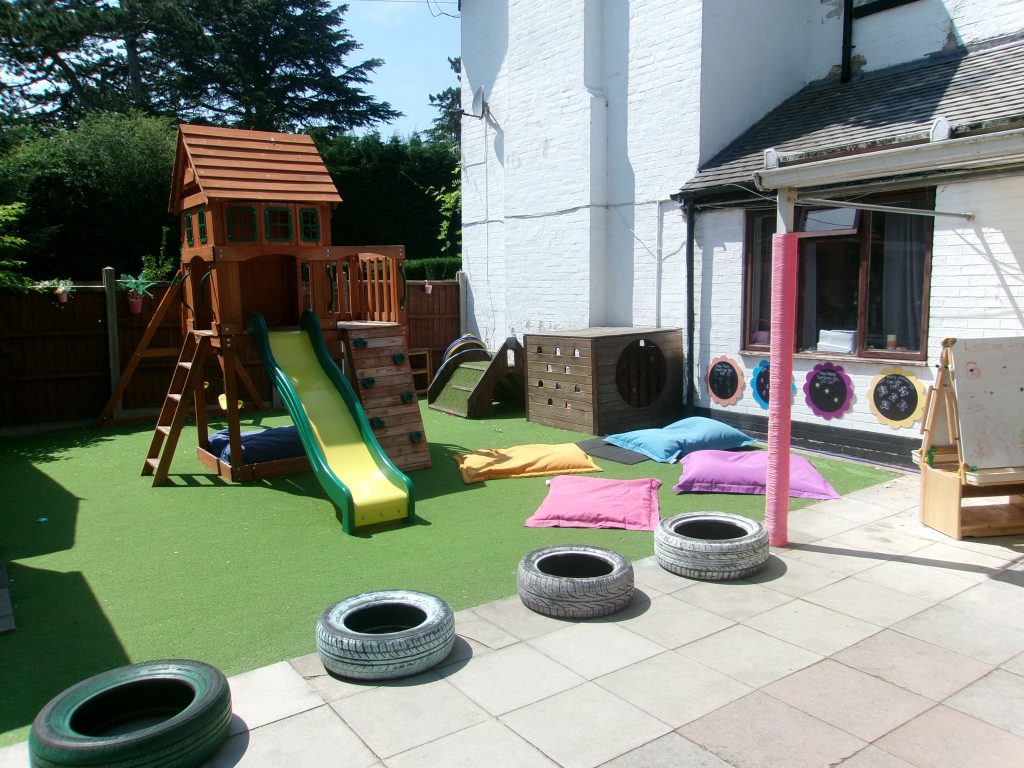
- Open-ended resources allow children to create games, obstacle courses, and imaginative scenarios.
- Outdoor creative experiences foster exploration and self-expression.
Characteristics of Effective Teaching and Learning
The garden also supports the three Characteristics of Effective Teaching and Learning:
- Playing and Exploring: Children investigate equipment, take on new challenges, and explore freely.
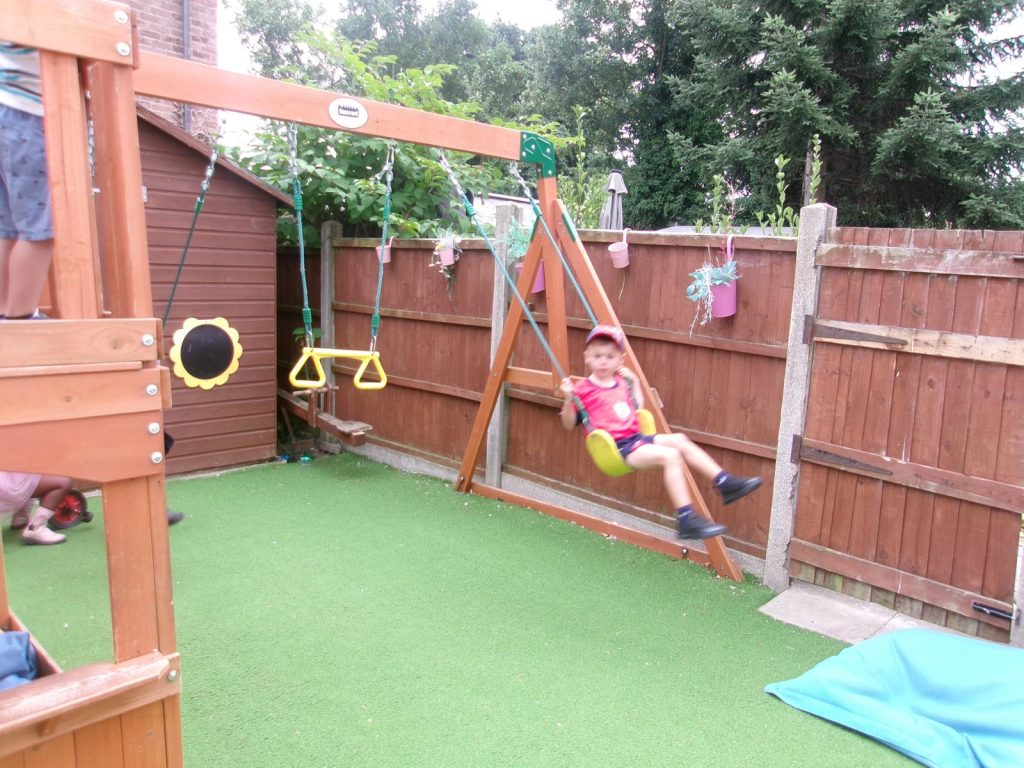
- Active Learning: Children stay engaged, persevere with physical challenges, and experience a sense of achievement.
- Creating and Thinking Critically: Children plan routes, solve problems, assess risks, and adapt their play using the available resources.
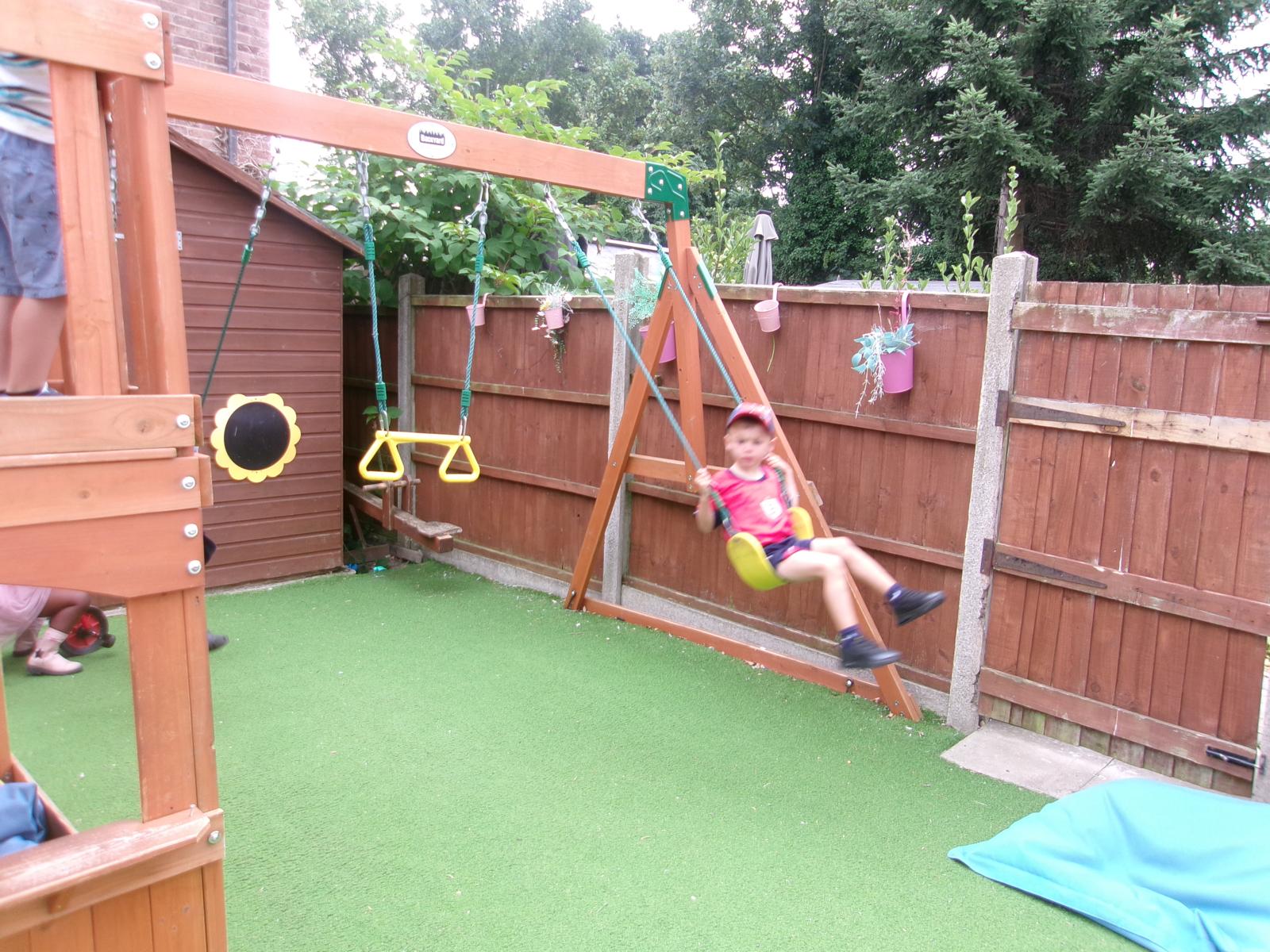
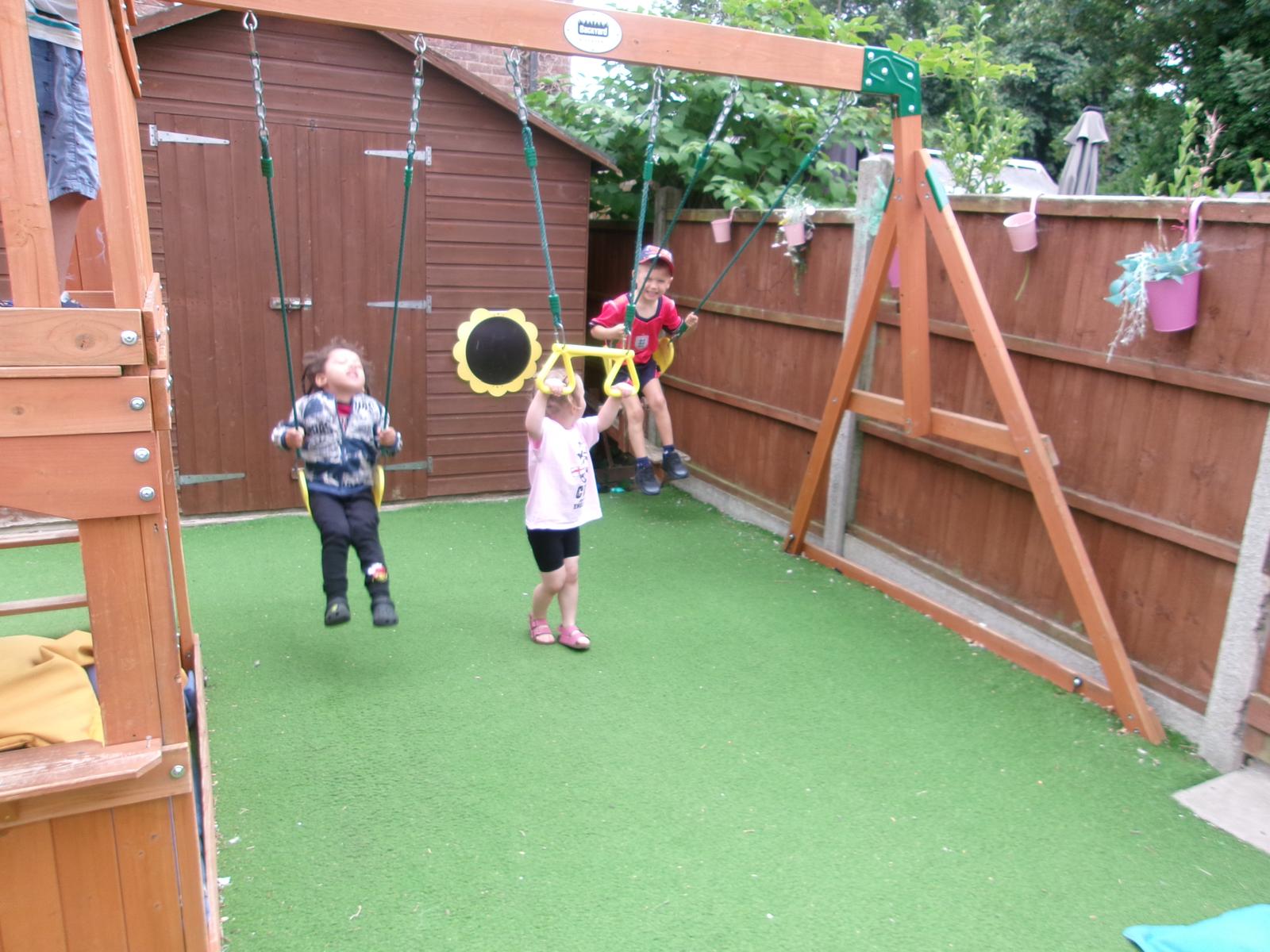
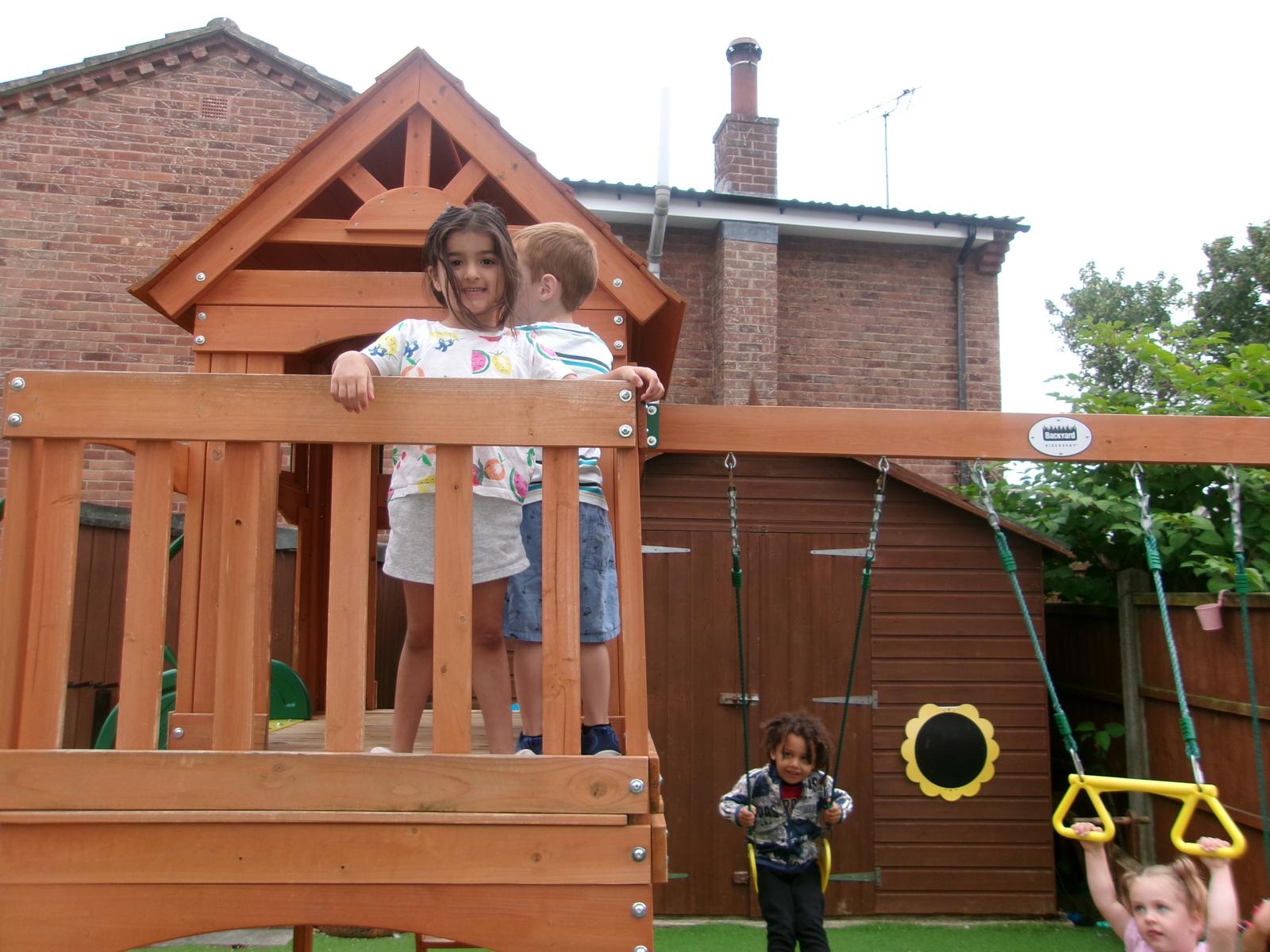
Overall, this outdoor environment provides a safe, stimulating, and inclusive space that supports children’s holistic development across all areas of the EYFS while encouraging active, independent, and imaginative learning.