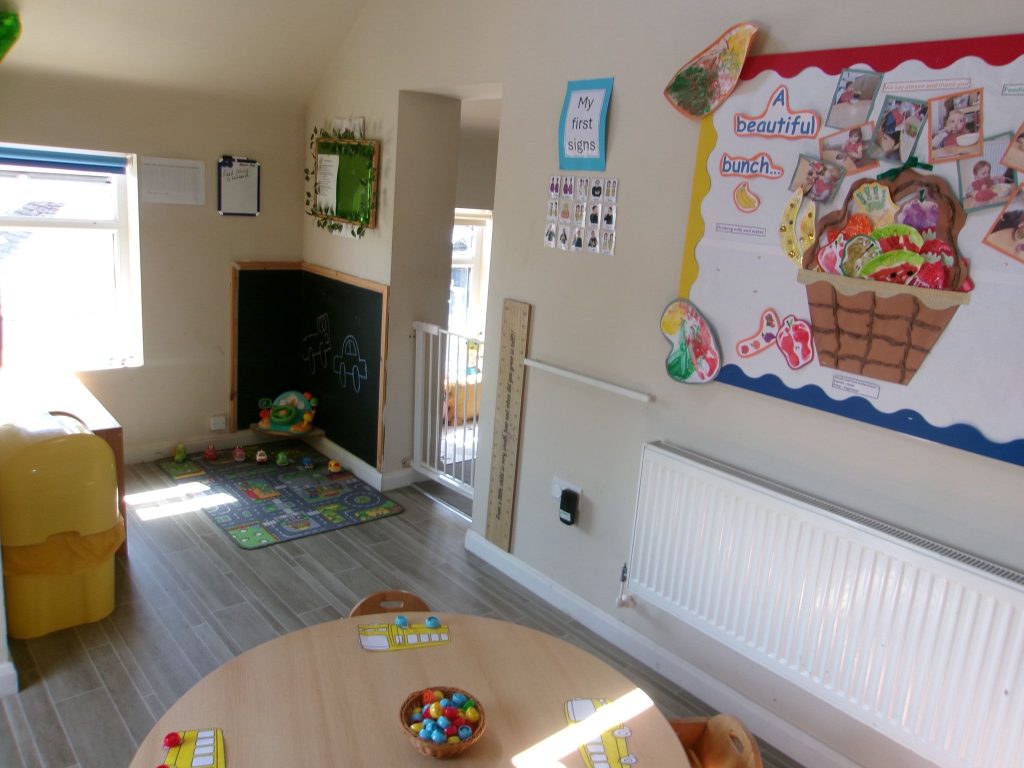
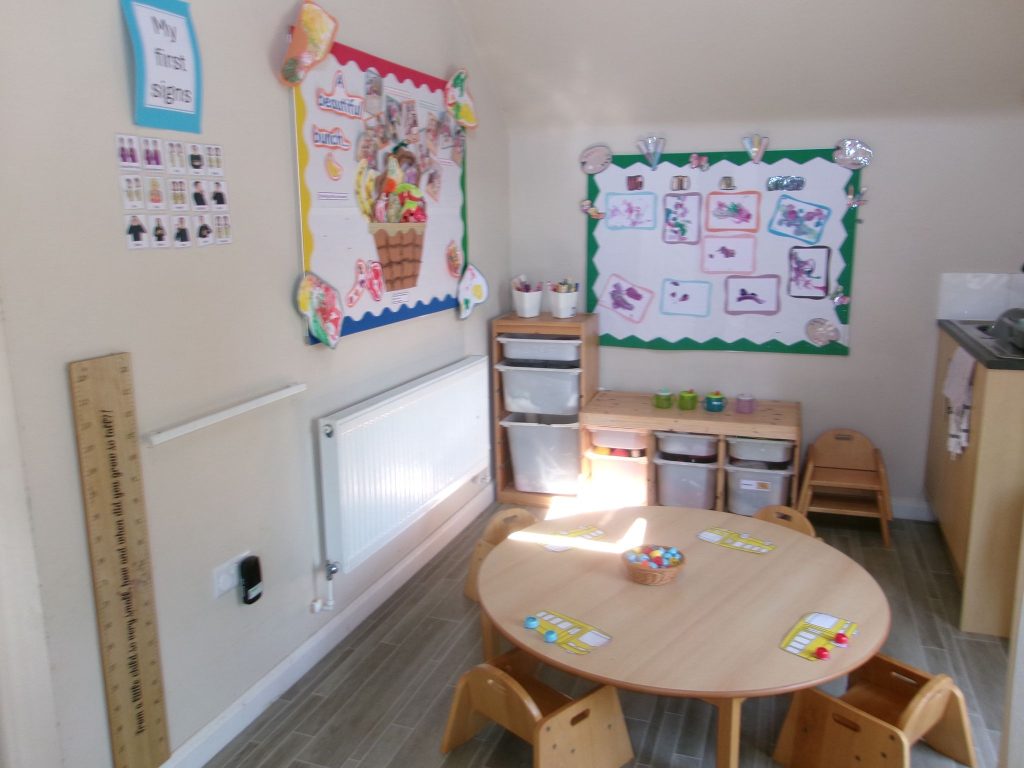
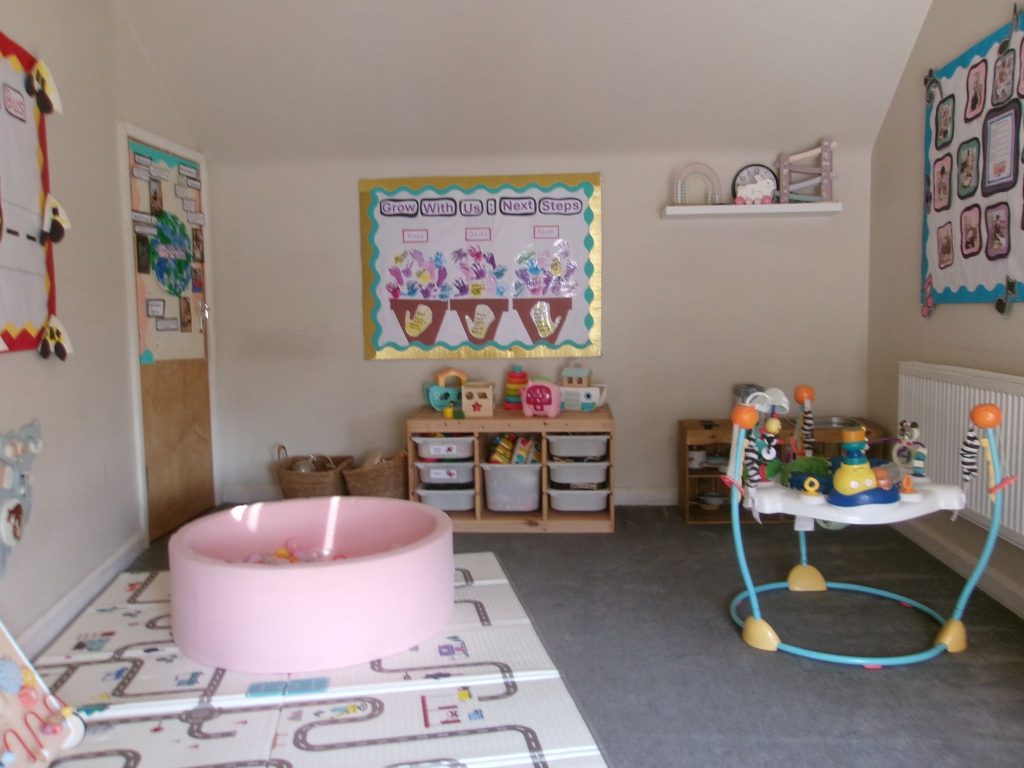
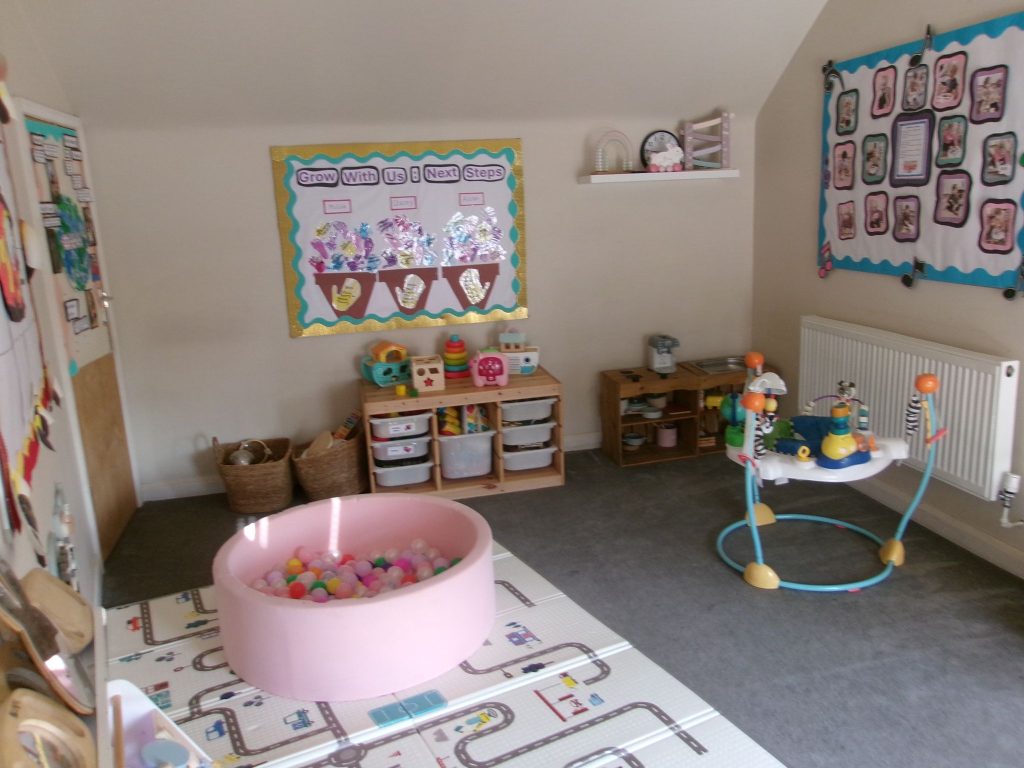
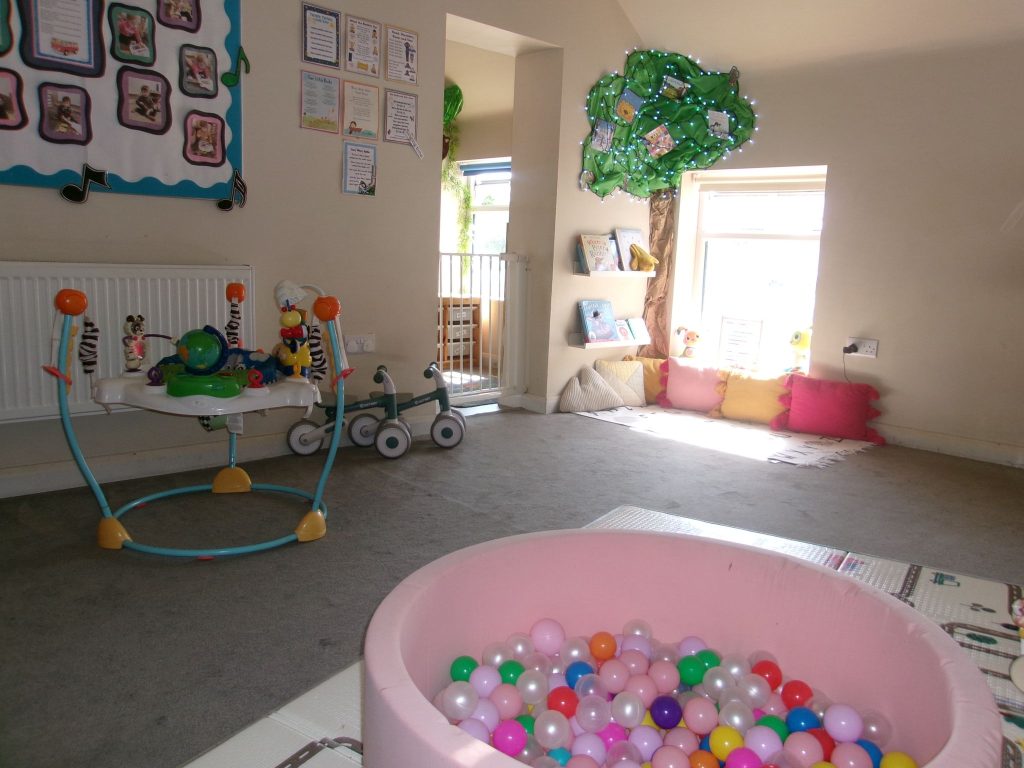
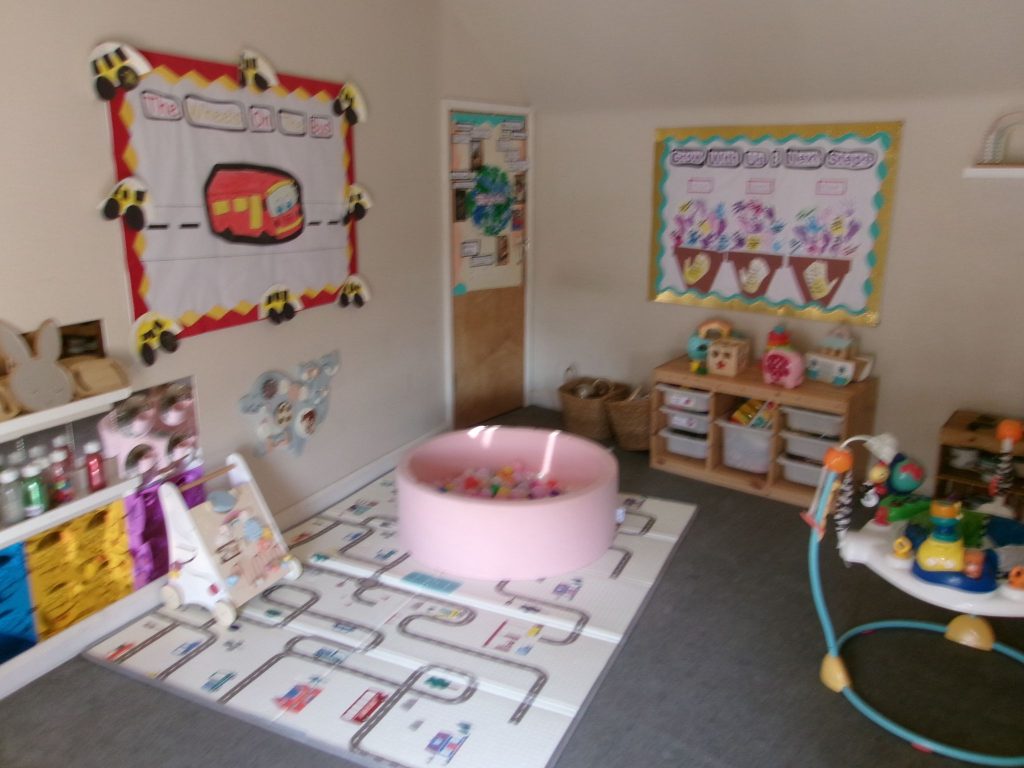
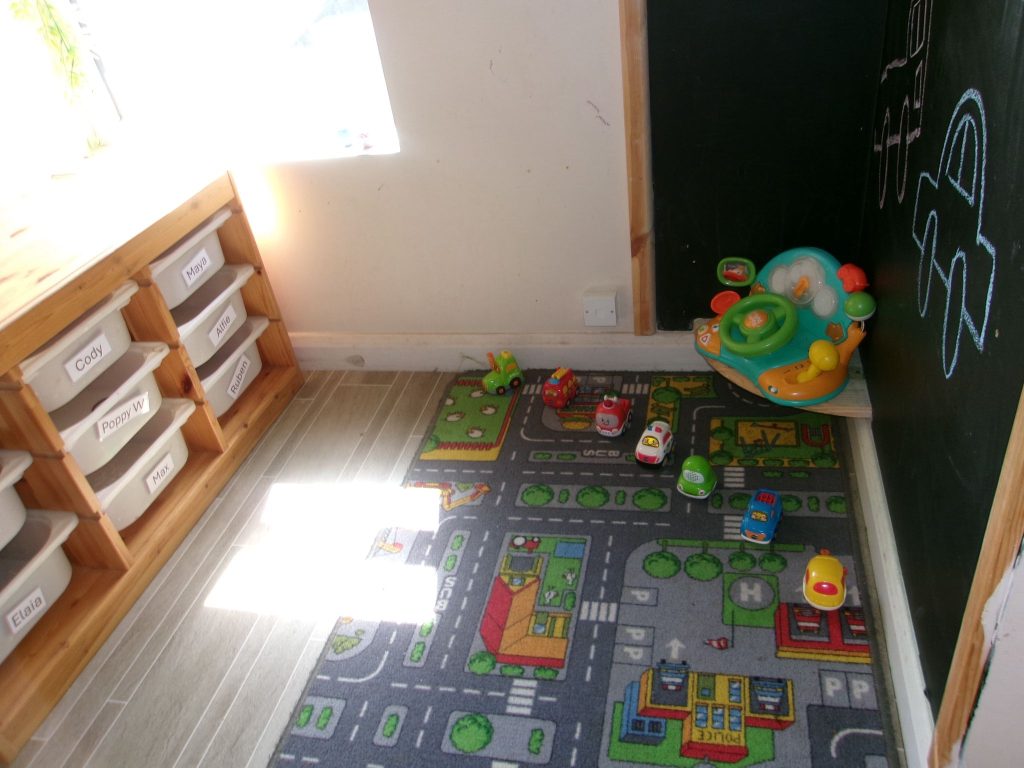
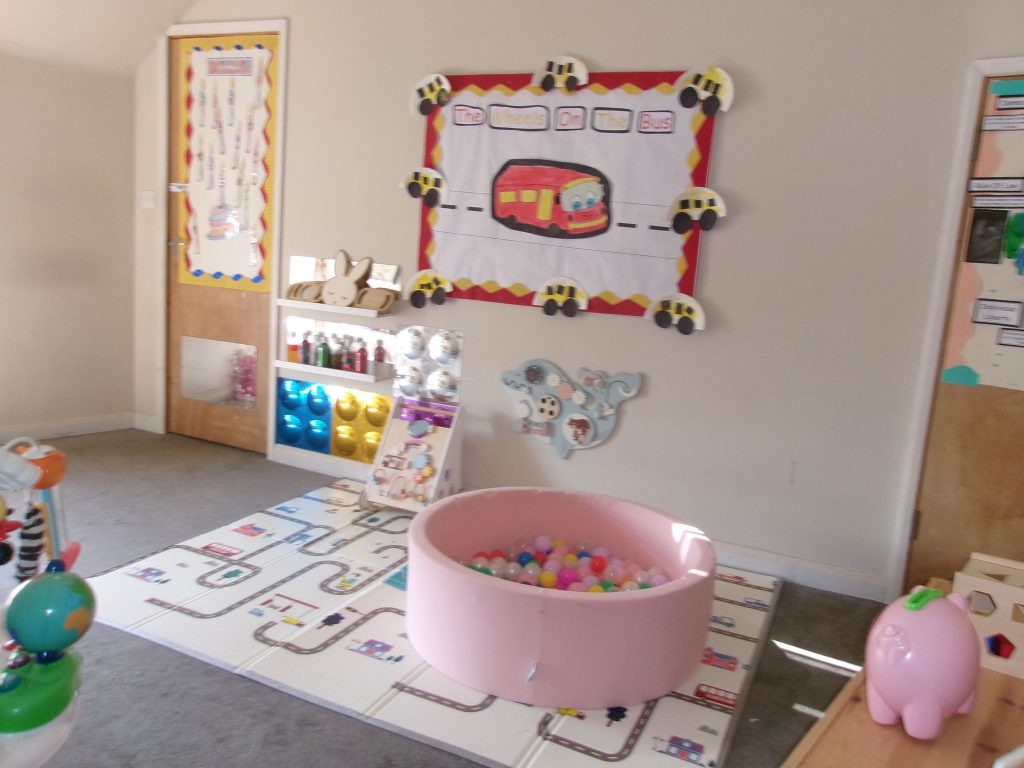
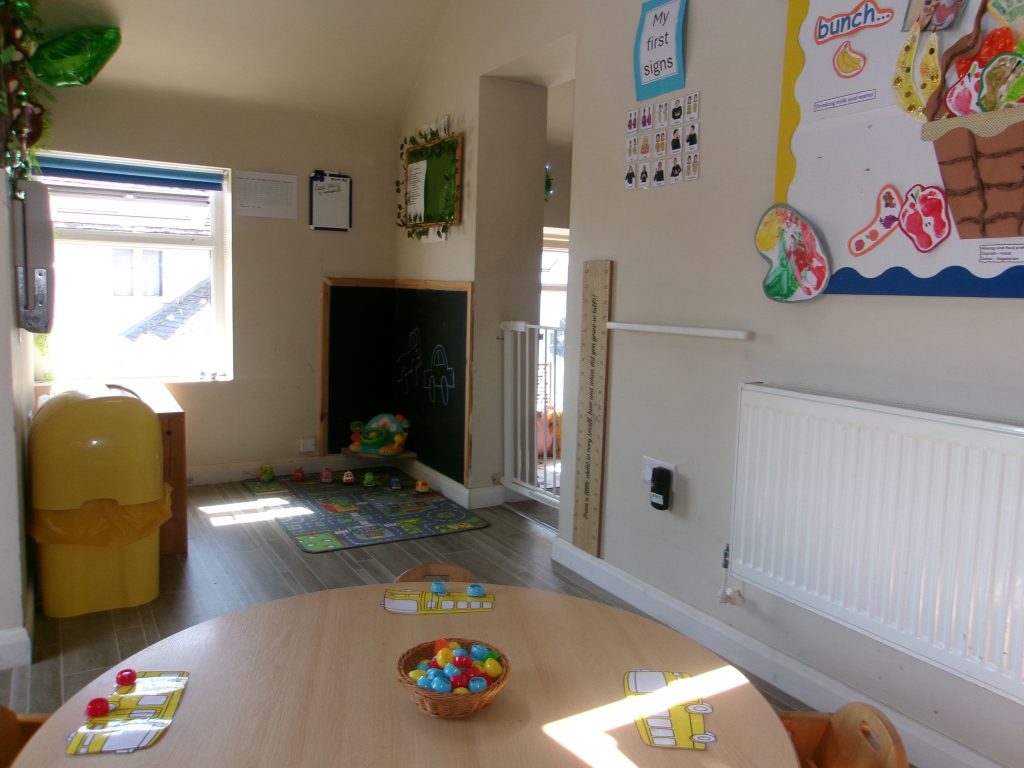
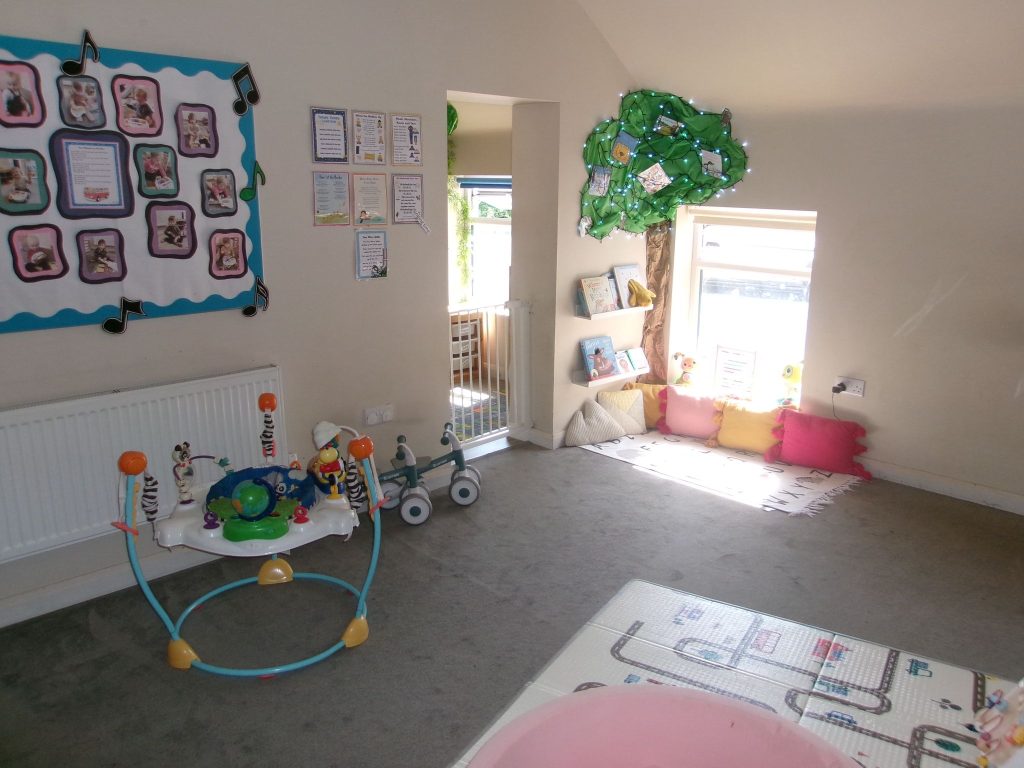
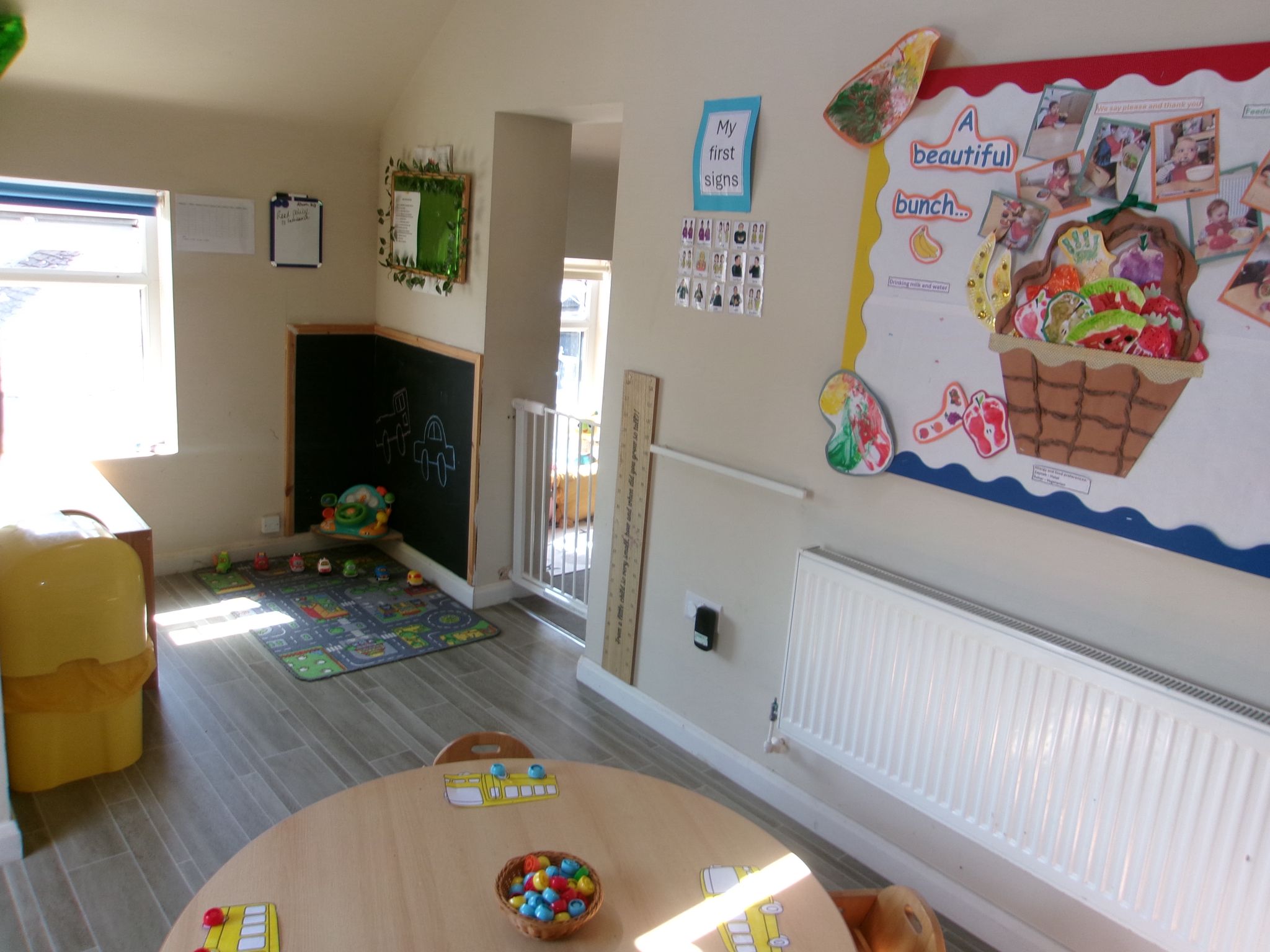
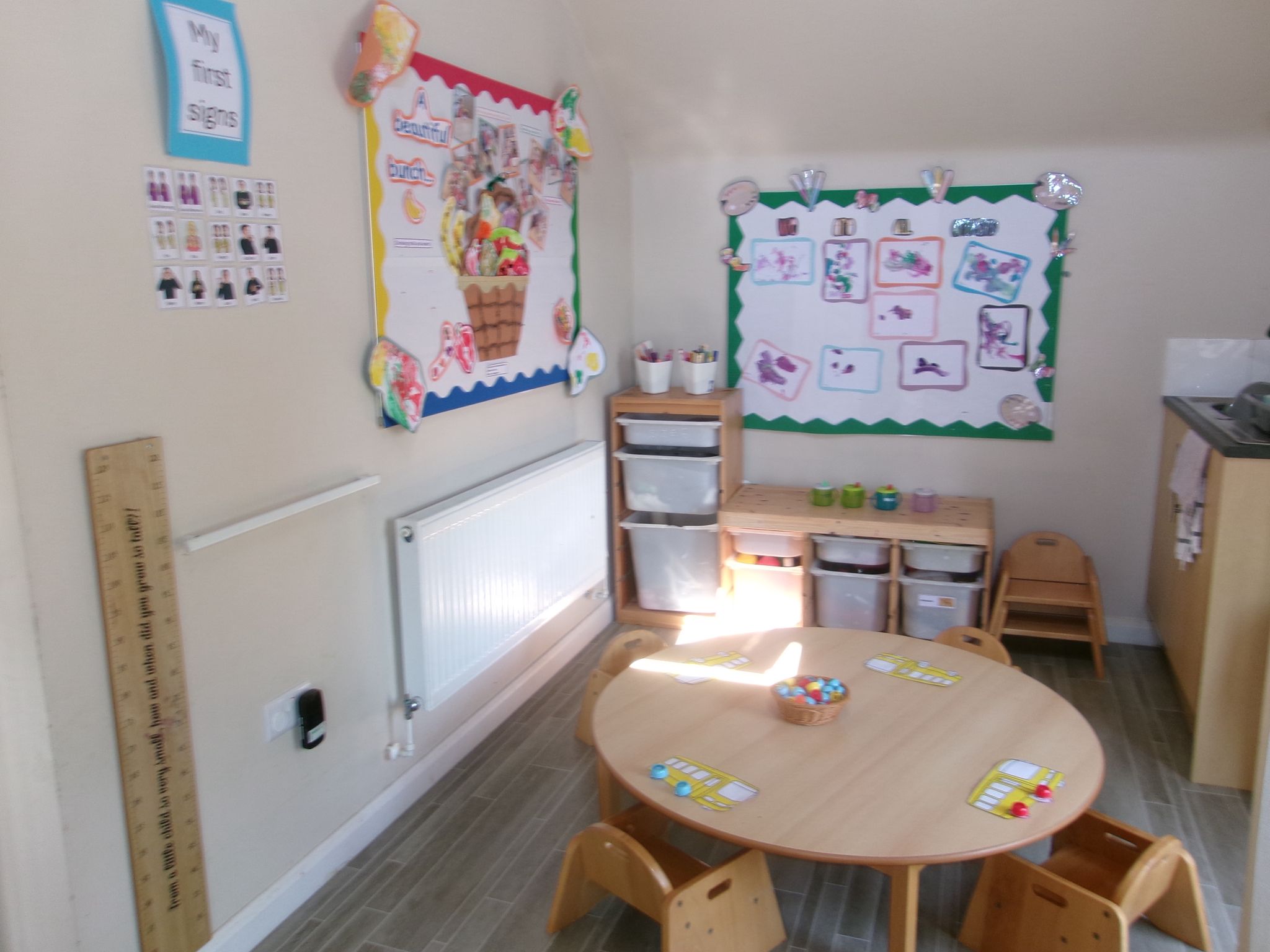
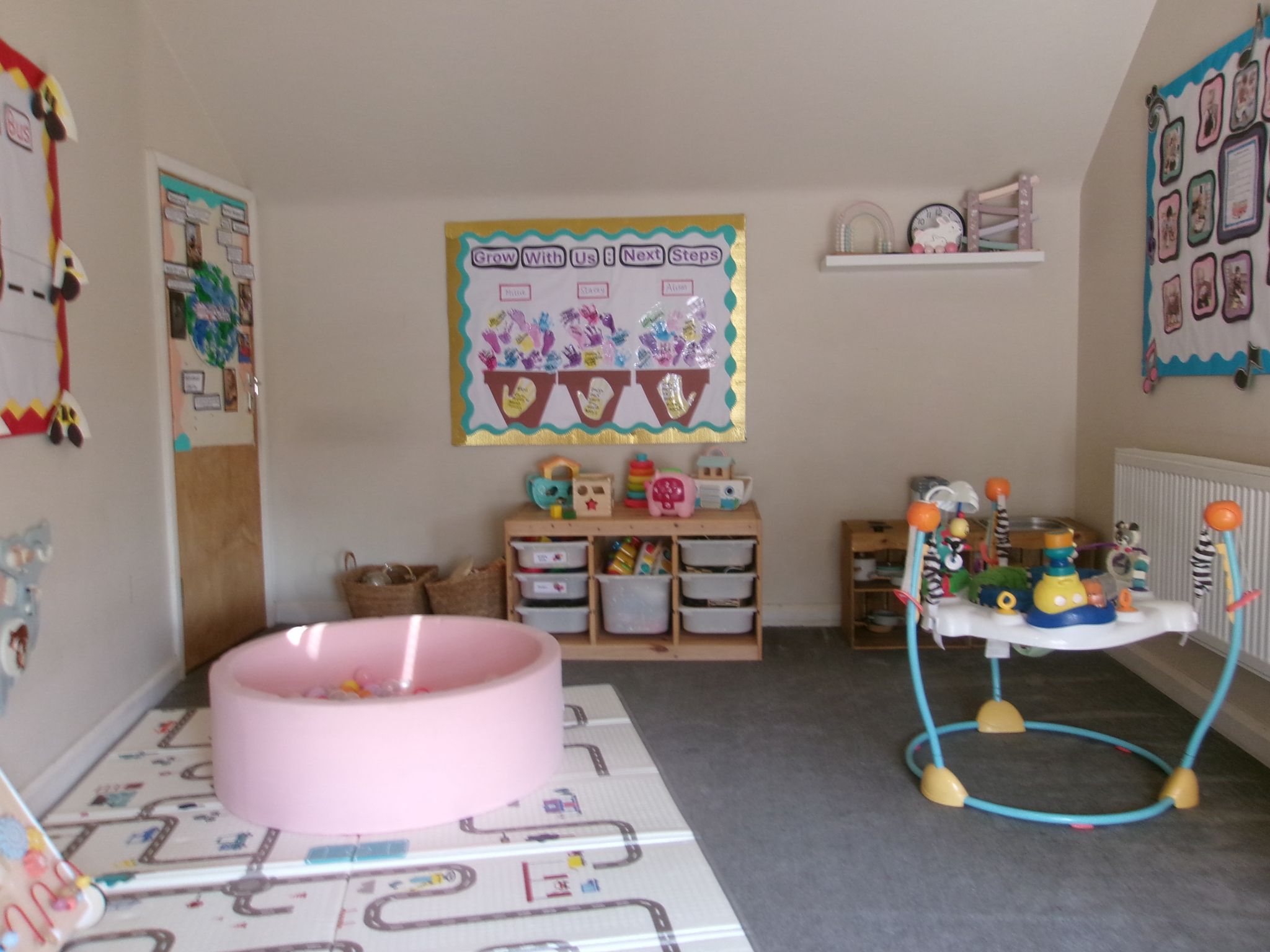
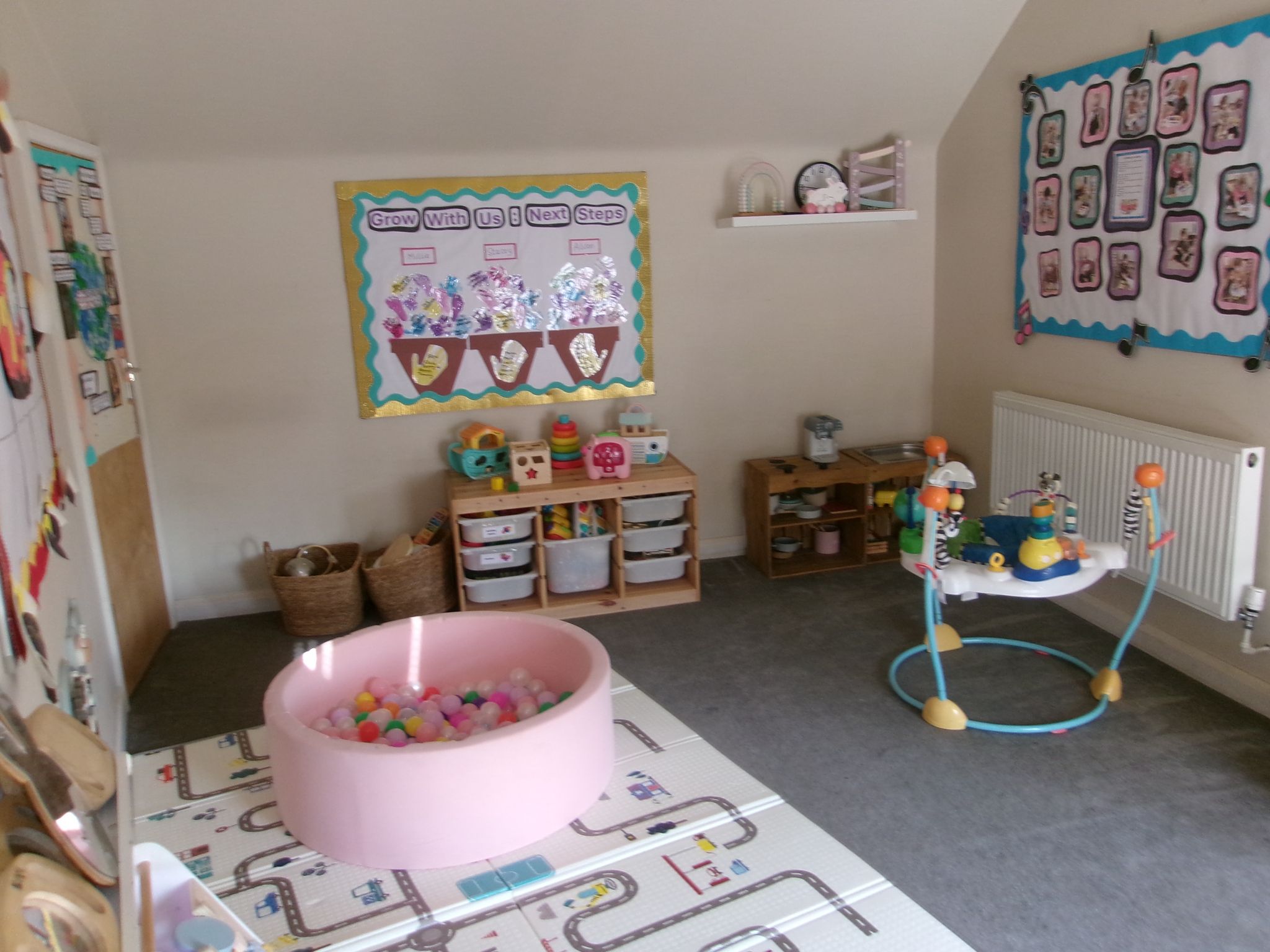
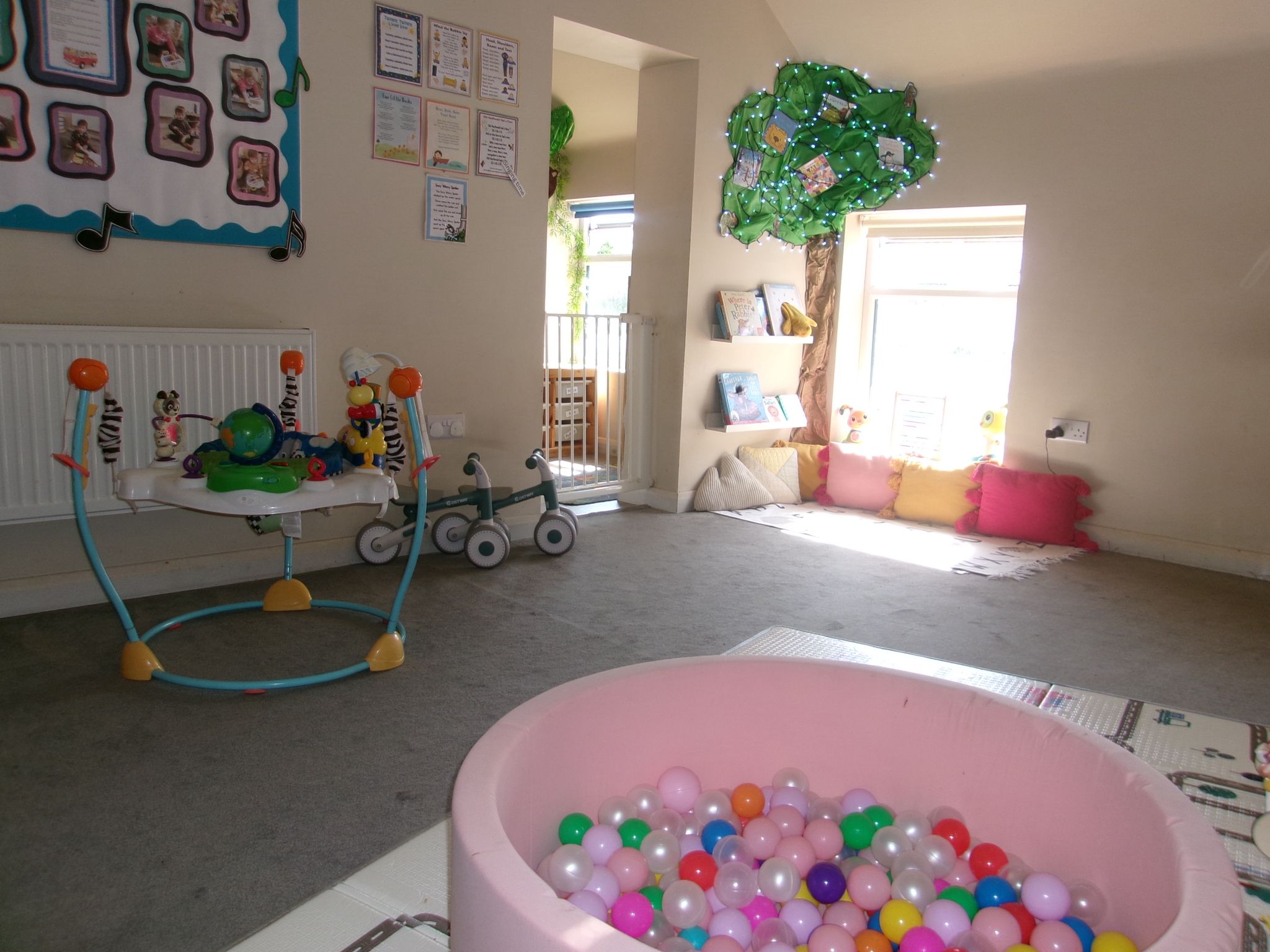
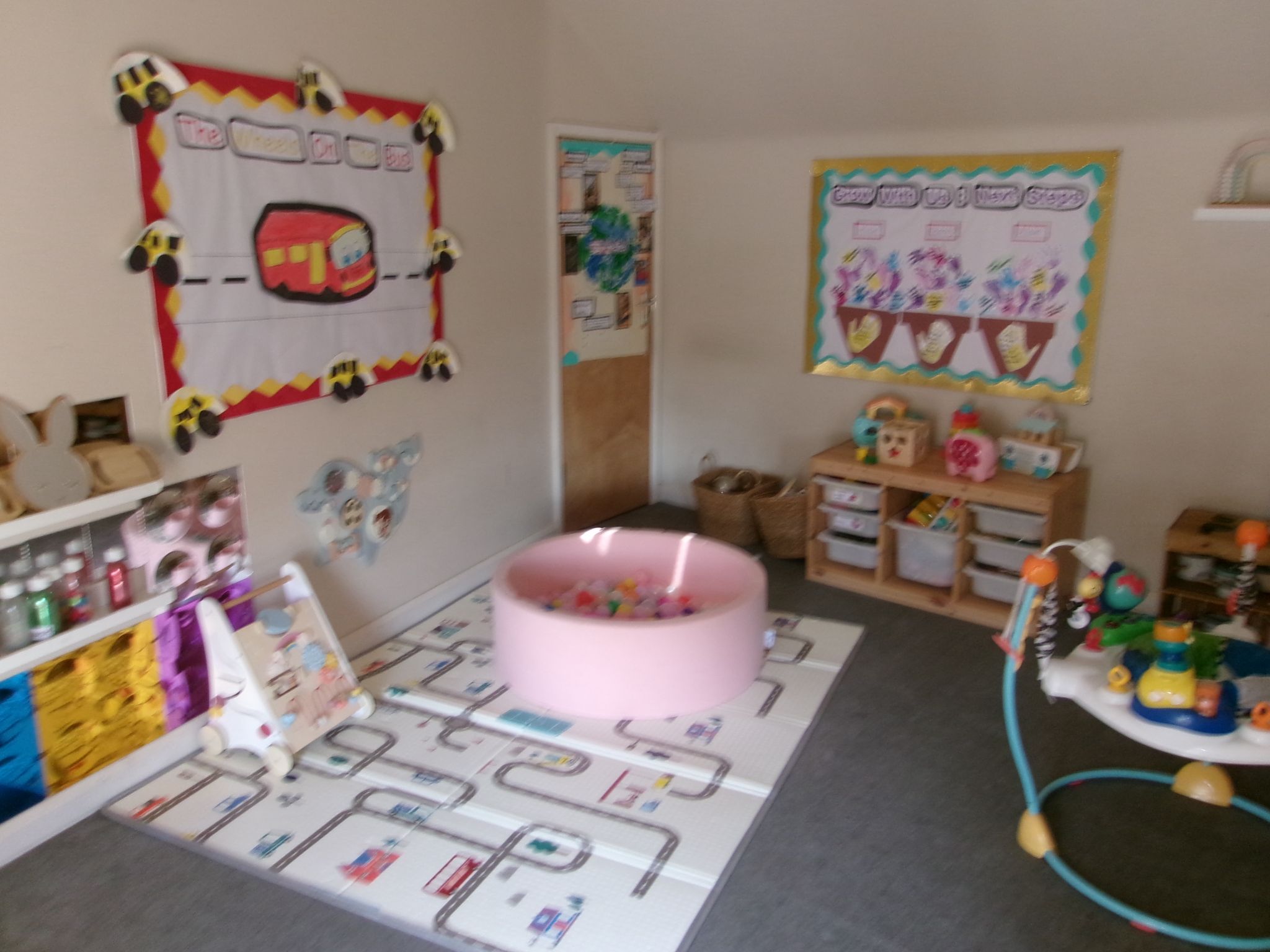
These baby room environments have been designed to provide a safe, nurturing and stimulating space that supports the learning and development of children aged 9 months to 2 years, in line with the EYFS (2024). The environments promote secure attachments, sensory exploration, independence and early communication through responsive interactions and play-based experiences.
Communication and Language
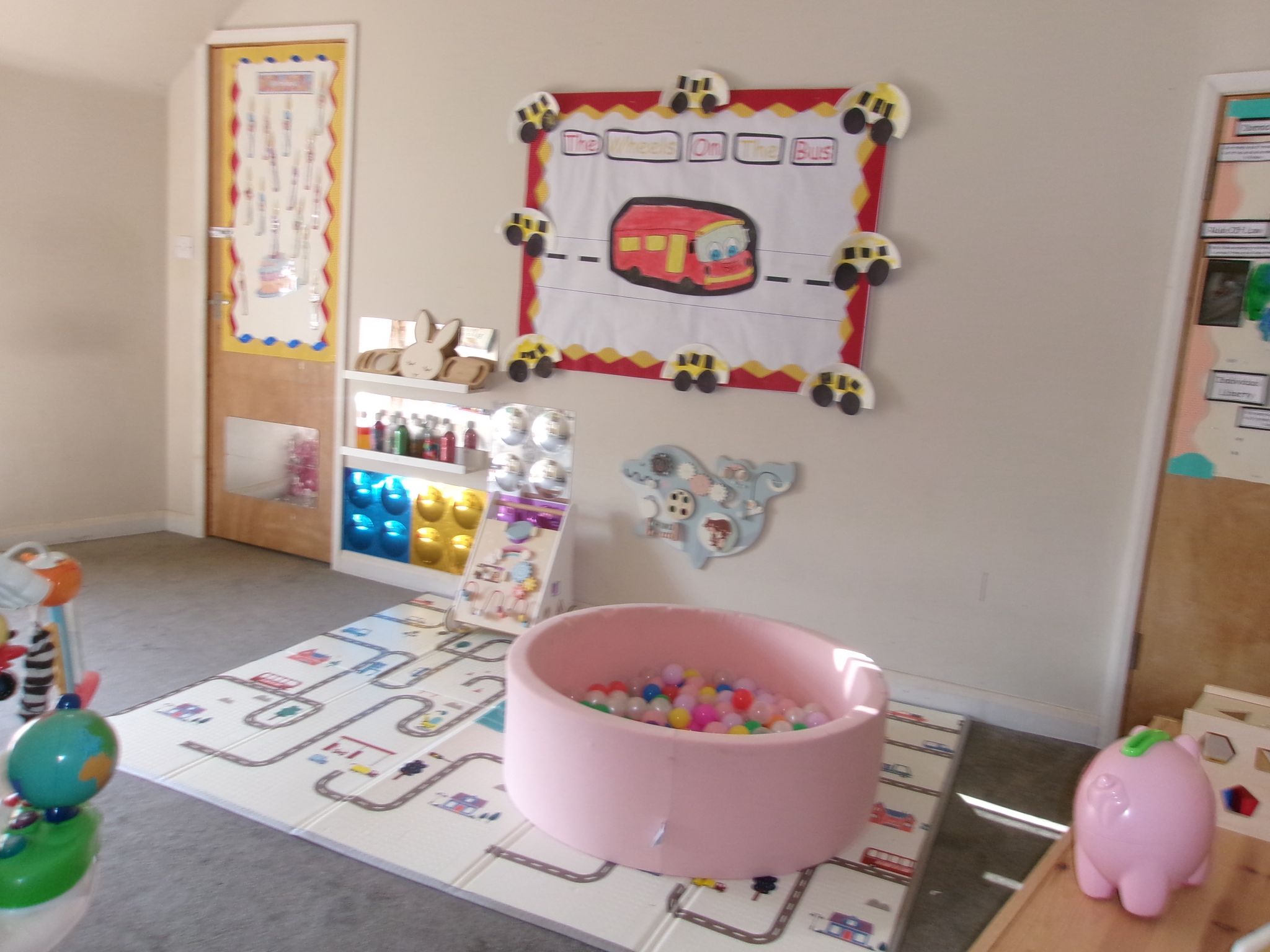
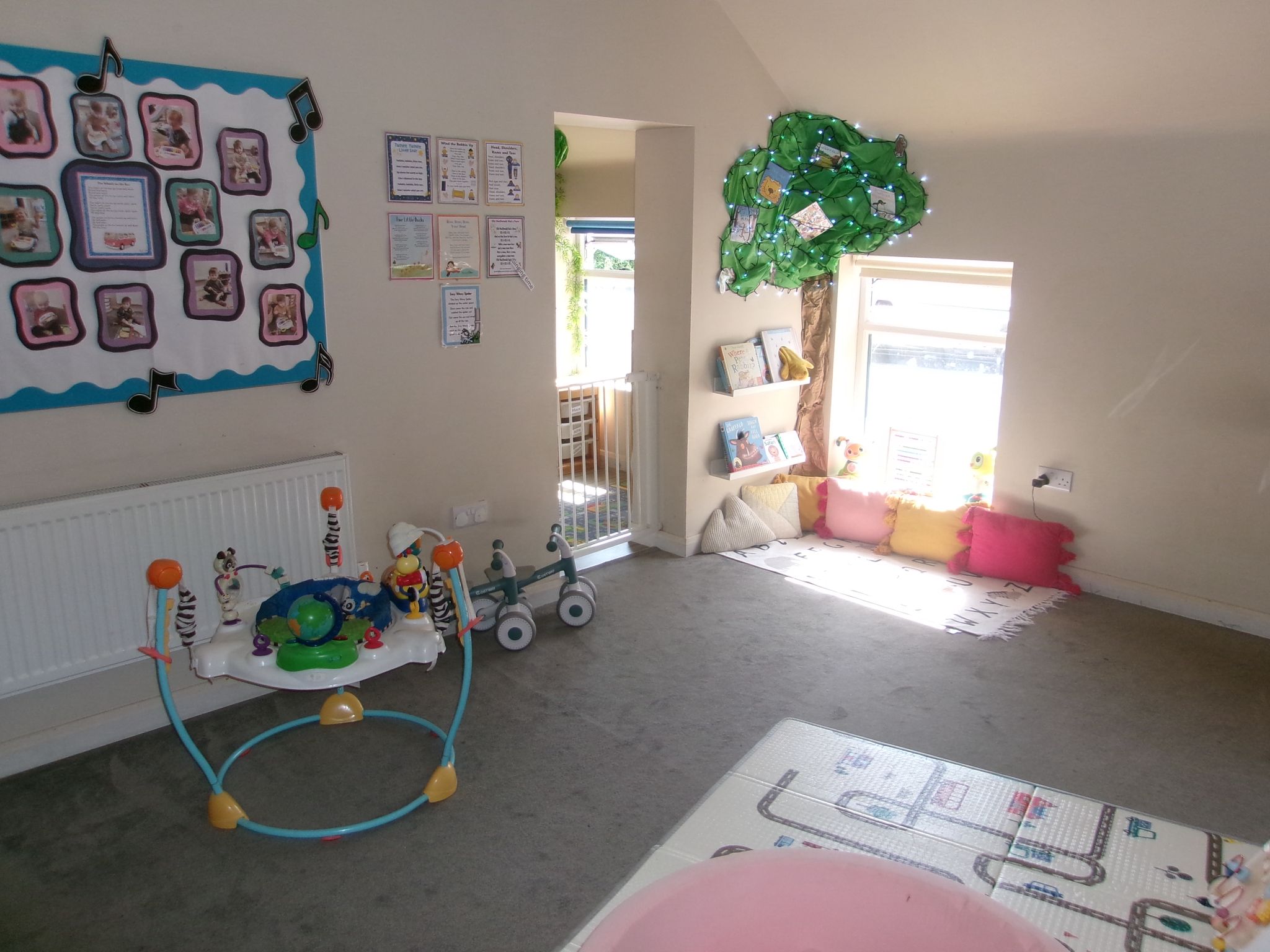
The environment encourages babies and young toddlers to develop their communication skills through songs, familiar rhymes, picture displays and meaningful interactions with practitioners. Visual displays, such as the nursery rhyme theme, support early language development, while cosy spaces encourage one-to-one conversations, singing and shared attention. Practitioners can model language, introduce new vocabulary and respond to children’s gestures, babbling and early words, supporting the EYFS focus on back-and-forth interactions.
Personal, Social and Emotional Development
The room creates a calm, welcoming atmosphere where children can build secure relationships with familiar adults. Comfortable spaces for quiet play and sensory experiences help children feel safe and emotionally secure. Displays celebrating children’s achievements and photographs help children develop a sense of identity and belonging. Opportunities to explore independently while knowing adults are close by support confidence, self-regulation and resilience.
Physical Development
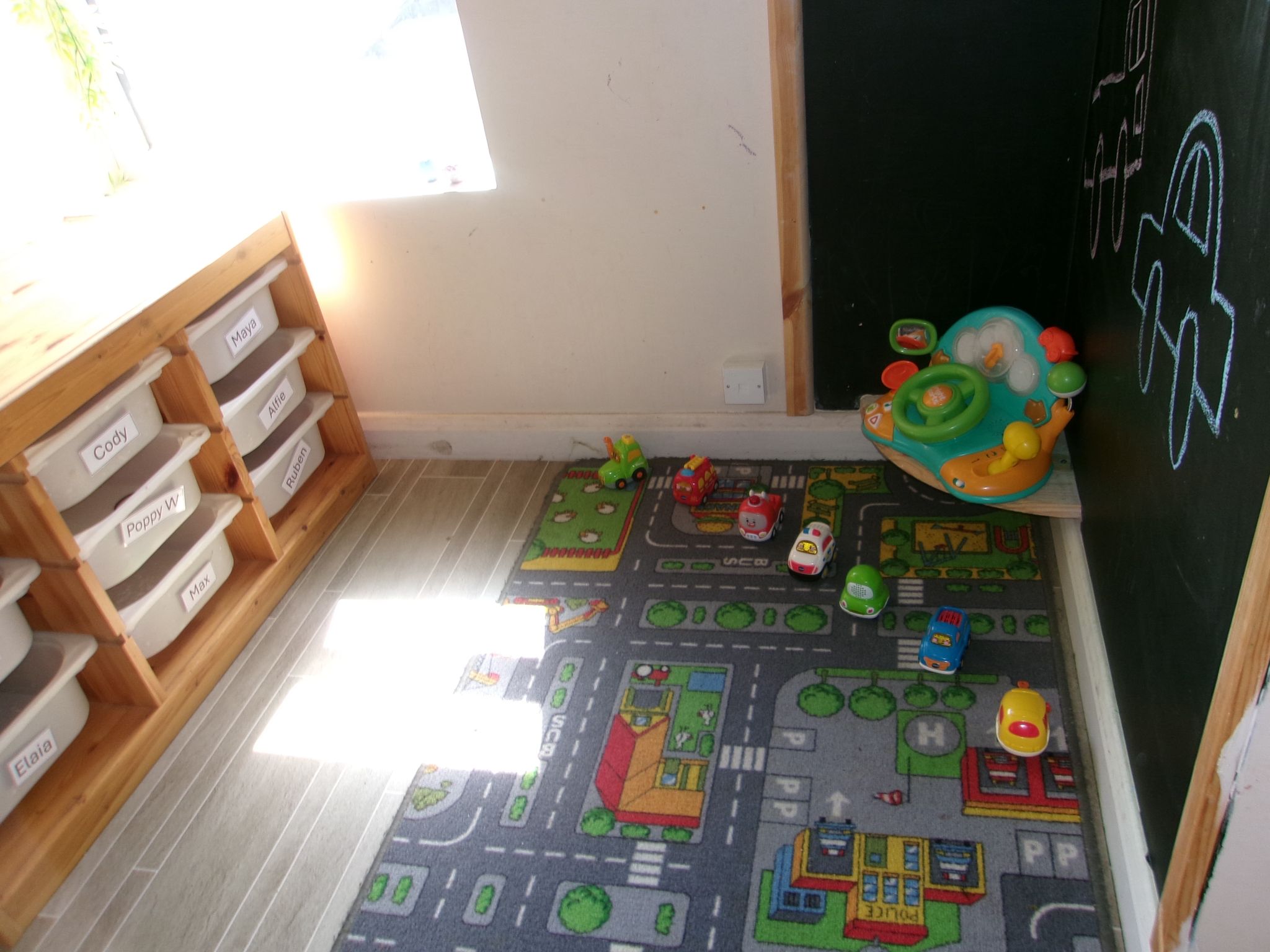
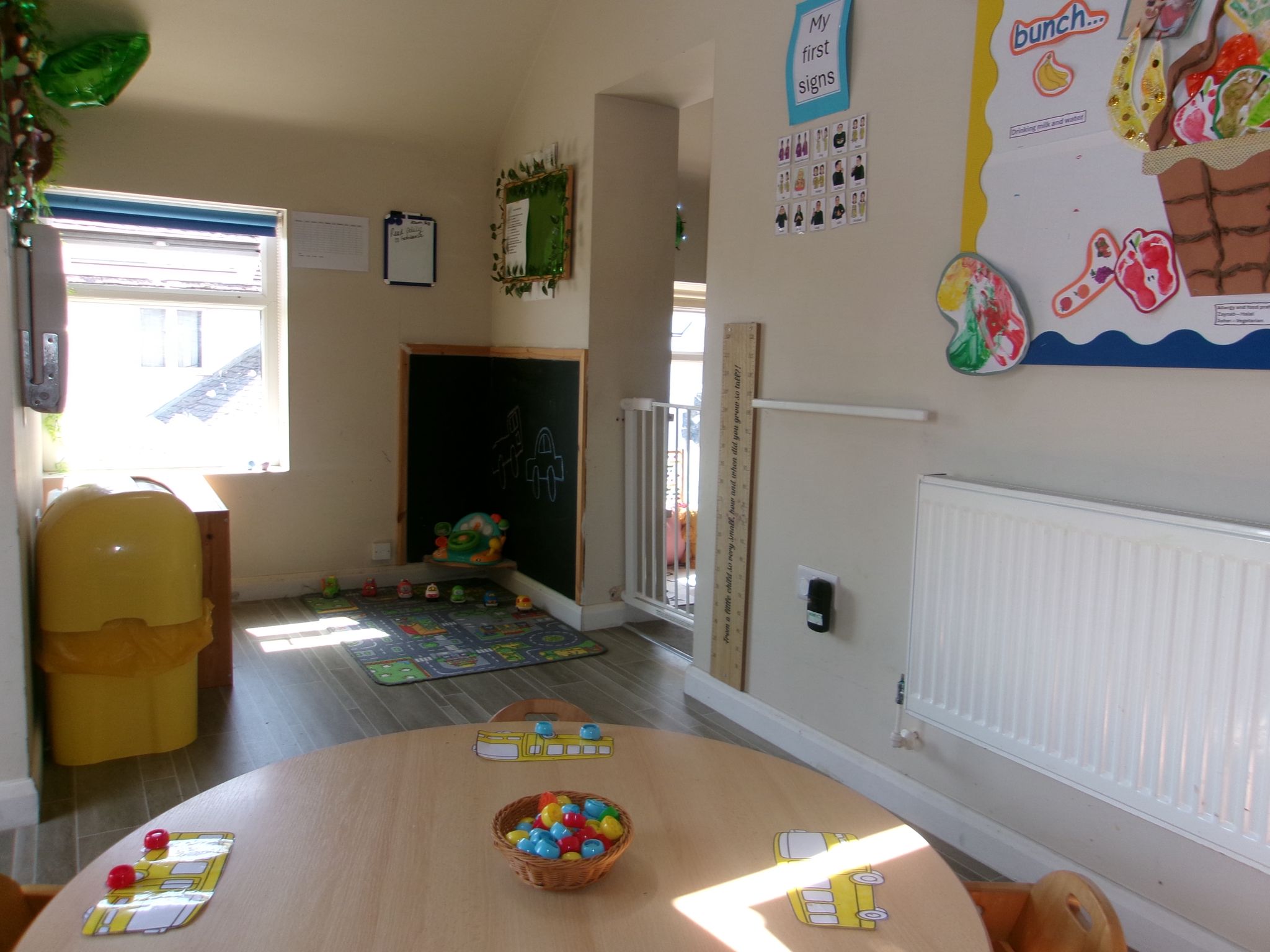
The spacious floor area enables babies to crawl, cruise, walk and explore safely, supporting gross motor development. Low-level resources encourage children to pull themselves up, reach, grasp and move independently. Sensory and manipulative resources strengthen fine motor skills through pushing, posting, stacking, filling and emptying activities. The child-height furniture encourages independence during mealtimes and creative experiences, while the accessible sink supports the development of self-care routines such as handwashing.
Literacy
Children are introduced to early literacy through familiar songs, visual displays, storytelling and opportunities to share books with adults. Practitioners can use these experiences to develop children’s listening skills, attention and understanding that pictures and print have meaning. Early mark-making opportunities allow children to explore making marks and develop the hand control needed for later writing.