Sensory Room
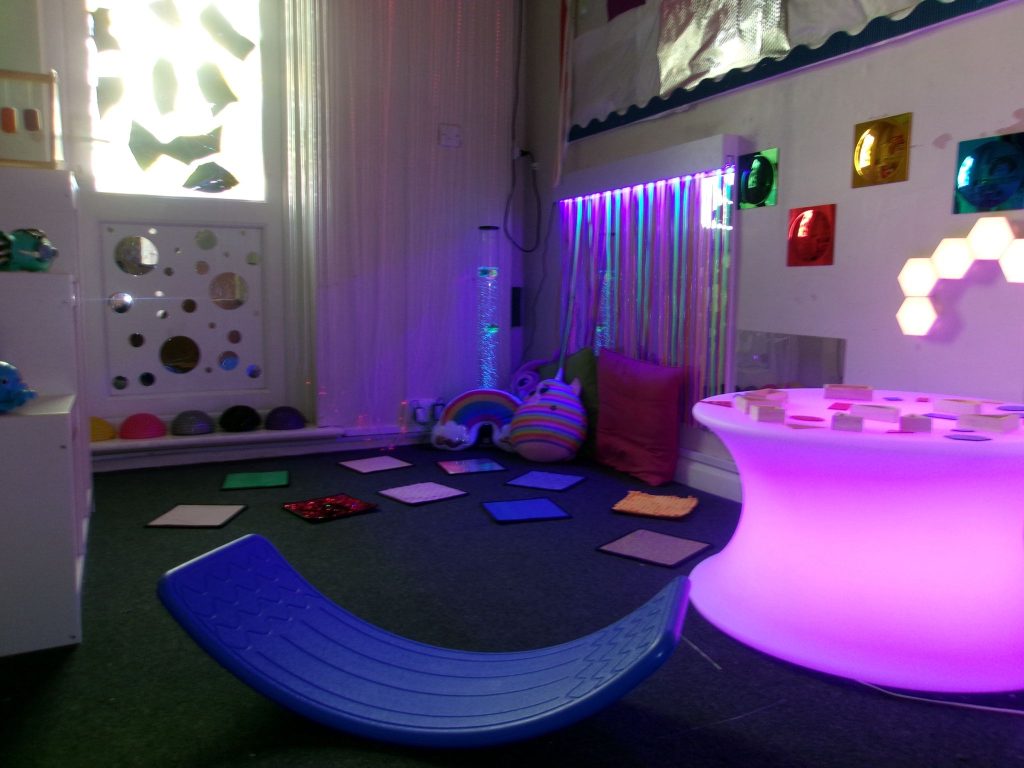
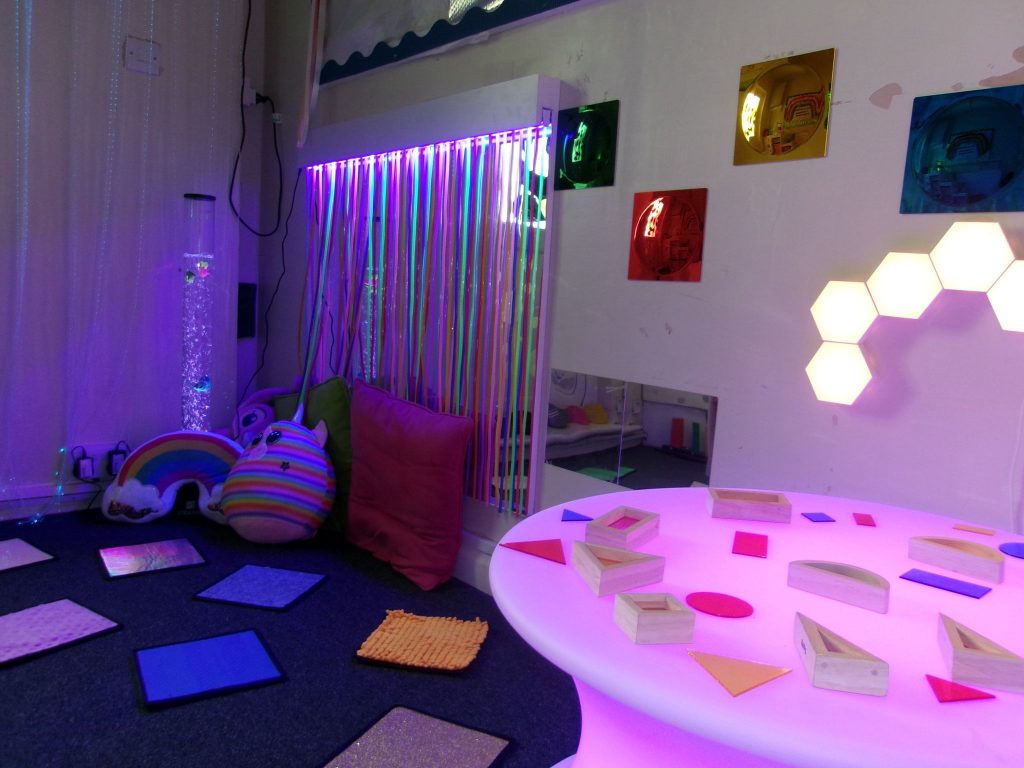
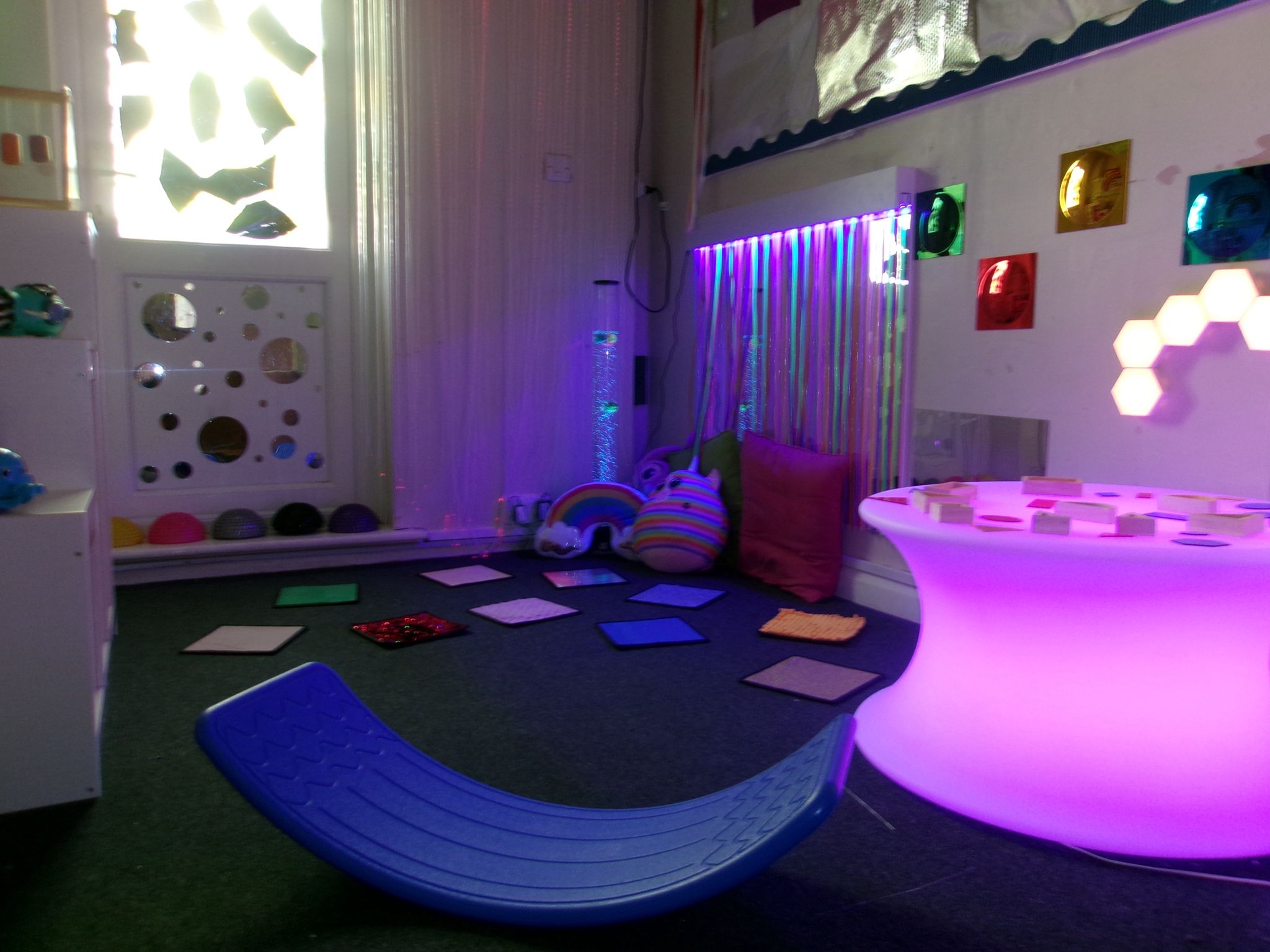
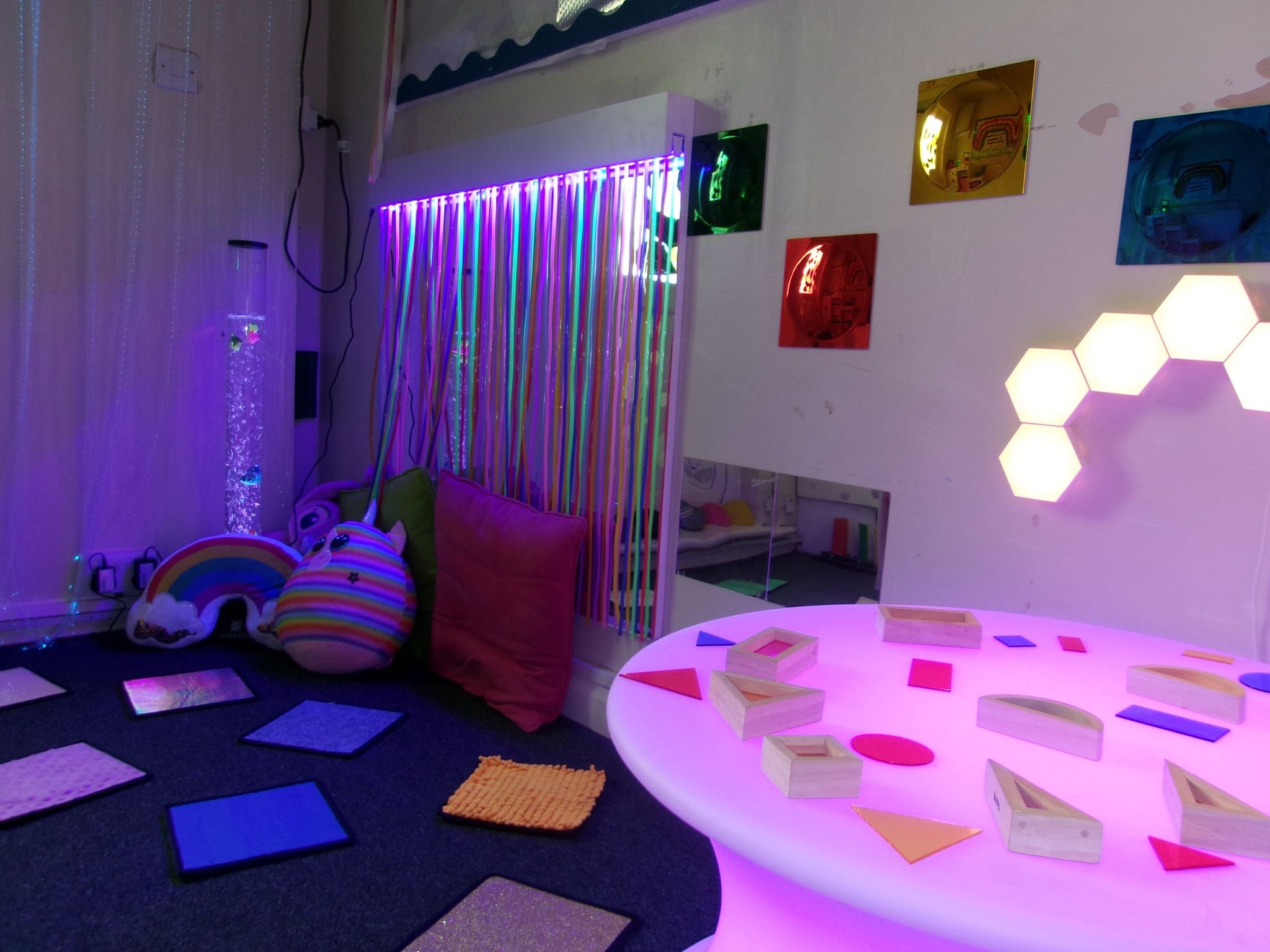
The sensory room encourages children to communicate about what they see, hear and feel. Resources such as the bubble tube, coloured lights and tactile objects provide opportunities for adults to introduce new vocabulary, ask open-ended questions and encourage children to express their thoughts and feelings. This supports listening, attention, understanding and speaking from 9 months to 5 years.
Personal, Social and Emotional Development (PSED)
The calming atmosphere, soft lighting, cushions and quiet space help children feel safe and secure. The sensory room supports emotional regulation, self-awareness and confidence, allowing children to relax, manage their emotions and build positive relationships through shared sensory experiences.
Physical Development
The wobble board, textured mats and open floor space encourage children to develop balance, coordination, core strength and gross motor skills. Exploring different textures also supports sensory processing and fine motor development as children touch, grasp and manipulate resources.
Literacy
The sensory room provides an engaging environment for sensory storytelling, sharing books and singing rhymes. Children develop listening skills, build vocabulary and begin to understand stories by linking sensory experiences with language.
Mathematics
Children develop mathematical understanding by exploring shapes, colours, patterns and sizes within the sensory resources. They can count objects, compare textures and use positional language while interacting with equipment and moving around the room.
Understanding the World
The sensory room encourages children to explore light, colour, reflection, sound and different materials. They investigate cause and effect through interactive resources and develop curiosity about how things work, supporting their understanding of the world around them.
Expressive Arts and Design
Children are encouraged to use their imagination through sensory play, music, movement and creative exploration. The lights, colours and tactile resources inspire role play, storytelling and creative expression in a stimulating environment.
Playing and Exploring
Children investigate the sensory equipment using their own ideas and interests, exploring different textures, lights and sounds through hands-on experiences.
Active Learning
The engaging sensory environment motivates children to concentrate, persevere and repeat activities, building confidence as they develop new skills.
Creating and Thinking Critically
Children make choices about how they use the sensory resources, solve simple problems, discover cause and effect, and think creatively during their play and exploration.